Will There Be A Solar Eclipse On August 2nd, 2025 Or 2027? Will It Be Visible From India? Check Here
There will be no solar eclipse on August 2, 2025, despite claims circulating online. The actual event is a total solar eclipse on August 2, 2027, lasting over 6 minutes, making it the longest of the century. While India won't witness a total eclipse, many cities, including Mumbai, Delhi, and Bengaluru, will experience a partial eclipse between 3:34 PM and 5:53 PM IST, weather permitting. The path of totality will pass through North Africa, Southern Europe, and the Middle East.
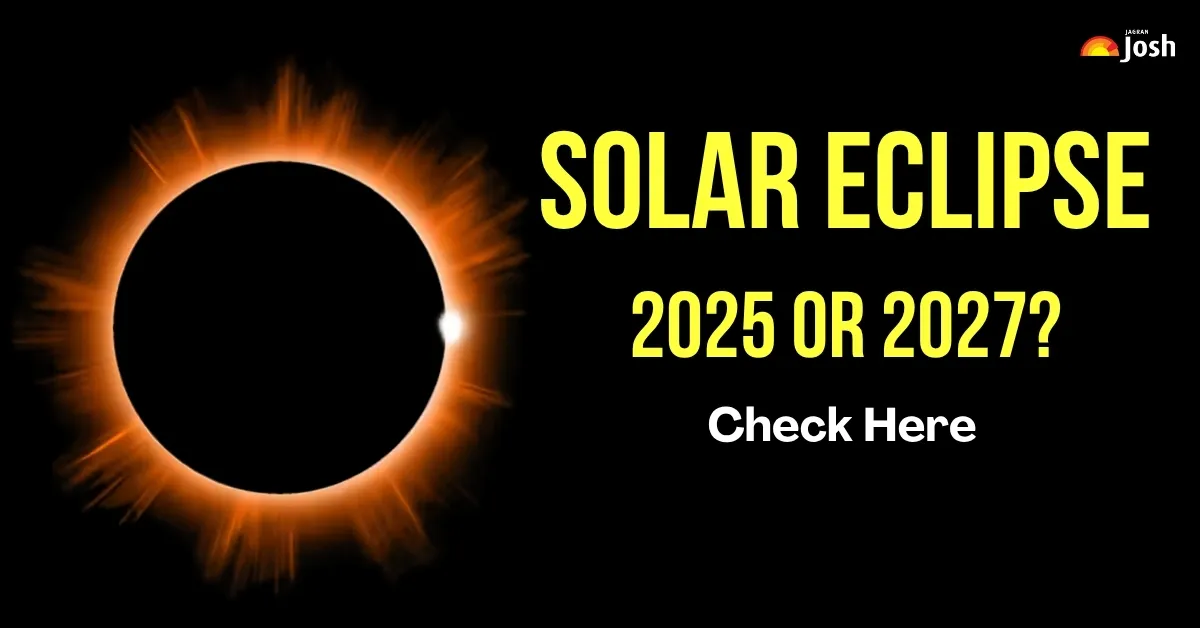
A solar eclipse is one of nature's most fascinating events. But will there be one on August 2nd in 2025 or 2027? Let's clear the confusion.
There will not be a solar eclipse on August 2, 2025. Some viral posts claimed there would be total darkness, but experts have confirmed this is false. Instead, a partial solar eclipse will occur on September 21, 2025, and it won't be visible from India.
However, August 2, 2027, will bring a total solar eclipse, and it's being called the "Eclipse of the Century". While India won't see the full eclipse, many cities will witness a partial eclipse in the late afternoon.
In this article, we'll take a look at the truth behind the August 2 eclipse dates, what skywatchers in India can expect, and how to view it safely.
Will There Be A Solar Eclipse On August 2, 2025 Or 2027? Check Here
Although there were some speculations that a solar eclipse would occur on August 2, 2025, astronomical sources, such as NASA, have confirmed that this is false.
However, a total solar eclipse will occur on August 2, 2027. This eclipse is highly anticipated because it's expected to be one of the longest total solar eclipses of the 21st century, with totality lasting up to 6 minutes and 23 seconds in some locations.
The path of totality for the August 2, 2027, eclipse will cross parts of Southern Europe (like Spain), North Africa (including Morocco, Algeria, Tunisia, Libya, and Egypt), and the Middle East (like Saudi Arabia, Yemen, and Somalia).
Luxor in Egypt is expected to experience the longest duration of totality.Parts of India will also experience a partial solar eclipse on this date.
When Will the Longest Solar Eclipse Happen?
The longest total solar eclipse of the 21st century is set to occur on August 2, 2027. This rare celestial event will last up to 6 minutes and 23 seconds in some regions—a duration that makes it the longest eclipse visible from land between 1991 and 2114.
The eclipse's path of totality will stretch across parts of Southern Europe, North Africa, and the Middle East, including countries like Spain, Morocco, Egypt, Saudi Arabia, and Yemen. Cities like Luxor in Egypt are expected to experience the longest period of total darkness.
What makes this eclipse so long?
- The Moon will be at perigee (closest to Earth), appearing larger.
- The Earth will be at aphelion (farthest from the Sun), making the Sun appear smaller.
- The eclipse will pass near the equator, where the Moon's shadow moves more slowly.

Kriti Barua is a skilled digital journalist and communications professional with 4+ years of experience, currently writing for the General Knowledge section at Jagran New Media. She has established herself as a subject matter expert in History, Geography, Trending National and International News, Sports, Science, and Defence, producing clear, reliable, and search-optimised content that connects with readers worldwide.
Kriti holds a BA degree from Delhi University and a one-year diploma in TV Production and Journalism, an academic background that adds research depth and strong storytelling instincts to her writing. Her experience spans brand writing, content marketing, and digital media, giving her a sharp understanding of what makes content both helpful to readers and visible in search.
At Jagran New Media, she applies this expertise to national and international news coverage, query-based articles, and in-depth pieces across her specialist subject areas. Her content is defined by easy language, factual accuracy, strong keyword strategy, and reader-friendly storytelling.


-1791894110284_t.webp)




![[यहां देखें] GDS 1st Merit List 2026 OUT: इंडिया पोस्ट जीडीएस पहली मेरिट लिस्ट जारी, ये रहा सर्कल वाइज रिजल्ट Direct Link](https://img.jagranjosh.com/images/2026/October/11102026/GDS-Merit-List-2026.jpg)
.jpg)
