AMU Students’ Union Protest Enters Fourth Week as Students Demand Elections, Proctor’s Resignation
Students at Aligarh Muslim University are boycotting classes and backing a hunger strike as the protest for the Students’ Union enters its fourth week. Three main demands drive the movement. Read the article to know further details.
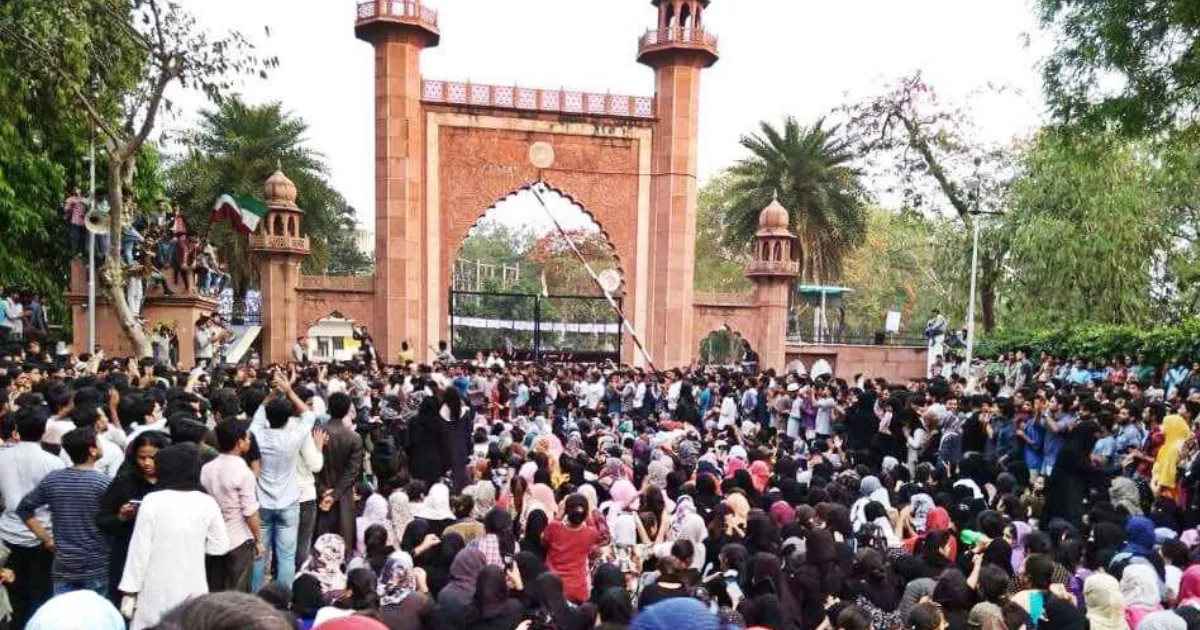
A protest for the restoration of the Aligarh Muslim University Students’ Union has expanded across the campus. Students are boycotting classes and joining an ongoing hunger strike. The agitation is about to enter its fourth week. The movement started with a demand for student representation. It has now grown into a wider campus protest with three main demands. Students want AMU Students’ Union elections. They want the resignation of the university proctor. They also want the withdrawal of suspensions that they call unlawful. Scroll for more details.
The Three Main Demands
The first demand is the restoration of the AMU Students’ Union and the start of the electoral process. Students say union elections have not been held since 2018-19. They are asking for a chief election officer and a final election date. They point to the recommendations of the Lyngdoh Committee and its guidelines on student union elections. For the students the issue is bigger than one election. They argue that the long absence of an elected union has left them without a formal platform. Such a body is needed to raise academic administrative and welfare concerns with the university. The second demand is the resignation of the AMU proctor. Students question the conduct of the proctorial administration and what they call the excessive use of disciplinary powers. Female students refer to an earlier incident involving students of Abdullah Hall. They say the proctorial administration behaved inappropriately in that matter. Some students also allege that the proctor’s office has created an atmosphere of pressure and fear. They mention phone calls, summons and official communications including matters involving female students. The third demand is the withdrawal of suspensions that protesters describe as unlawful.
Hunger Strike and Growing Campus Support
At the centre of the agitation is the indefinite hunger strike by Yaser Fahad at Duck Point. Students have repeatedly expressed concern over his health and asked for a quick resolution. Tension rose at Duck Point during the night of 6 and 7 October. A medical team and members of the proctorial administration came to assess his condition. Protesters say there was an attempt to take Fahad to hospital. Fahad said he wanted medical help at the protest site. Students then formed a human chain around him and stayed at the site. They wanted his health monitored without ending the protest or moving him away. This incident gave new momentum to the agitation and students stayed at Duck Point through the night. Female students have joined the protest in large numbers. Students from Abdullah Hall, Indira Gandhi Hall and Begum Sultan Jahan Hall are taking part. They are raising slogans in support of the demands. Their participation has widened the agitation beyond the group at Duck Point. The protest has also spread to academic departments. Students from Urdu Law and other major departments are boycotting classes. This boycott has turned a single location protest into a wider campus movement. The campaign has also received support from outside the university. Danish Ali the joint secretary of the Jawaharlal Nehru University Students’ Union, spoke to students at Duck Point and expressed solidarity. The dispute has also entered a legal and administrative phase. On 6 October advocate and former AMU student Syed Kaif Hasan sent a legal notice to the AMU vice-chancellor, the registrar and the Dean of Students’ Welfare. The notice raised concerns about alleged derogatory remarks linked to the vice-chancellor’s office, the implementation of the Lyngdoh Committee recommendations and the issues around Fahad’s hunger strike. The response of the administration will decide the next phase. As the hunger strike continues and class boycotts spread one question remains. Will AMU authorities open talks with the students or will the campus mobilisation grow stronger.
Faham is an education specialist and has over three years of experience in the education and edtech industry, specializing in digital and educational content creation. He holds an MBA in Marketing and Human Resources from Swami Vivekanand University. Throughout his career, Faham has developed expertise in creating engaging and informative content across diverse educational domains.
In addition to his edtech experience, he worked for two years as a Public Speaking and Creative Writing Expert, helping learners enhance their communication and writing skills. He has also been associated with Testbook and Adda Education as a Content Writer, where he created high-quality content for K–12 education, Management Entrance Examinations, UPSC, Law, and State Defence examinations. His strong understanding of educational content and exam preparation enables him to simplify complex topics and deliver valuable learning resources to students.


