List of 7 animals that start with Y: Check Names and Facts
While less common than other letters, the list of animals whose name begins with the letter Y includes creatures like the high-altitude Yak and the deep-sea Yeti Crab. But there is more to discover about animal names with Y, from their habitats to unique traits.
Key Points
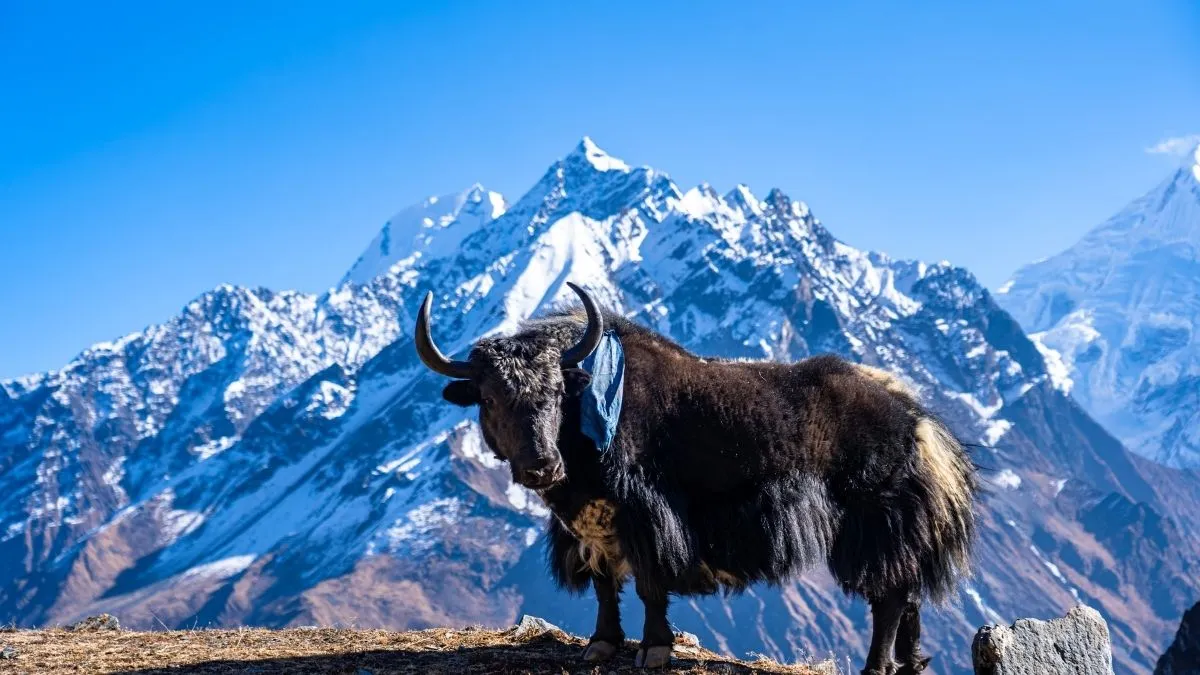
- Yak: Largest land animal starting with Y, adapted to the Himalayas' cold, thin air.
- Yeti Crab: Discovered in 2005, farms bacteria on its claws in deep-sea vents.
- Yellow-Eyed Penguin: Endangered penguin unique to New Zealand, prefers private nests.
Many of us struggle to name animals that start with Y because there are relatively few species whose names begin with this letter. But the animal kingdom is full of surprises. Animals whose names start with Y have learned to live in some of the harshest places on Earth, from the cold peaks of the Himalayas to the hot vents on the ocean floor.
For example, the Yak is famous for living through very cold weather, and the Yellow-Eyed Penguin is one of the rarest types of penguins in the world. This article, therefore, talks about a few of the many animal names starting with the letter Y and about their strange behaviors.
List of Animals whose Names Start with a Y
The following table highlights the animal names, their classification, and the distinct features that make them stand out in the wild.
| S.No. | Animal that Start with Y | Type | Fun Fact |
| 1. | Yak | Mammal | Largest land animal starting with Y |
| 2. | Yellow Mongoose | Mammal | Known for its golden coat and agility |
| 3. | Yeti Crab | Crustacean | Deep-sea dweller with "hairy" claws |
| 4. | Yellowfin Tuna | Fish | One of the fastest swimmers in the ocean |
| 5. | Yellow-Eyed Penguin | Bird | Endangered species unique to New Zealand |
| 6. | Yabby | Crustacean | Freshwater crayfish found in Australia |
| 7. | Yellow-Bellied Sapsucker | Bird | Woodpecker known for drilling sap wells |
Check Out: List of 5 Most Famous Animals that Migrate in Winter: Revealed
1. Yak

The Yak (Bos grunniens) is probably the most well-known animal that starts with Y. This huge bovid is the biggest land animal that starts with Y. It lives in the Himalayas. Yaks have a strong body, thick legs, and long, shaggy hair that hangs down to the ground. This keeps them warm in very cold weather. Their blood has more red blood cells than most other mammals, which is interesting because it lets them take in more oxygen in places with thin air, like at high altitudes. They are very important to people in the area because they give them milk, wool, and transportation.
2. Yellow Mongoose

The Yellow Mongoose is a small, friendly mammal that lives mostly in open country and semi-desert areas of southern Africa. It has a unique golden-yellow or reddish coat, which is true to its name. These active meat-eaters often share their burrows with meerkats and ground squirrels. They are very quick and use their tails to steer themselves when they run. A fascinating fact is that the Yellow Mongoose is immune to the venom of some snakes, making them fearless hunters of small reptiles and insects in the Kalahari region.
3. Yeti Crab

The Yeti Crab (Kiwa hirsuta) is one of the strangest animals that starts with the letter Y. It was only found in 2005. This crustacean lives in the South Pacific Ocean near hydrothermal vents. It gets its name from the white, hairy claws that look like the Yeti. Scientists think that these "hairs" (setae) grow bacteria that the crab can eat, so it can "farm" its own dinner on its arms. This creature can't see because it lives in complete darkness. It uses its other senses to find its way through the crushing depths.
4. Yellowfin Tuna

The Yellowfin Tuna is one of the strongest fish in the ocean and may be the biggest fish that starts with Y. These fish are shaped like torpedoes and can weigh over 400 pounds. They are made to go fast and can swim up to 75 km/h (47 mph). Their fins and finlets are bright yellow, which makes it easy to tell them apart. Yellowfin Tuna are warm-blooded, so they have more muscle than most fish. This lets them swim across huge oceans. Marine biologists have been interested in this behavior for decades because they often swim with dolphins.
5. Yellow-Eyed Penguin

The Yellow-Eyed Penguin is a native of New Zealand and is one of the rarest penguin species in the world. The Māori call it Hoiho, which means noise shouter. They have a pale yellow band of feathers that goes across the back of their head and around their eyes, which is what the name means. Unlike other penguins that breed in crowded colonies, Yellow-Eyed Penguins prefer privacy and nest out of sight of their neighbors in coastal forests. Conservation efforts are currently critical to saving this unique animal, starting with Y, from extinction.
6. Yabby

If you visit Australia, you might encounter the Yabby, a common freshwater crayfish caught in dams, lakes, and rivers. Yabbies are tough crustaceans that can stay alive when it doesn't rain by digging deep into the mud and staying there until it does. This is a survival skill that can last for years. They are detritivores, which means they eat dead plants and animals. This is very important for keeping bodies of water clean. Most Yabbies are brown or green to blend in with the mud, but in clear waters, some can be bright blue.
7. Yellow-Bellied Sapsucker

This North American woodpecker has a very descriptive name. The Yellow-Bellied Sapsucker drills neat rows of small holes in tree bark to drink the sugary sap that oozes out. These "sap wells" also attract insects, which the bird then eats, providing a balanced diet of sugar and protein. While they are fascinating to watch, they are sometimes considered pests by orchard owners because their drilling can damage trees if it is too extensive. Their rhythmic drumming on trees is often used to communicate with other sapsuckers in the spring.
Check Out Animal Names Beginning with Other Letters
The list of animal names that start with Y shows a surprising range of life, from the woolly Yak in the mountains to the tough Yabby in Australian riverbeds. Each of these animals has developed unique traits that help them live in their own habitats. The Yeti Crab's ability to live in deep water and the Yellowfin Tuna's ability to swim fast show that even the less common letters of the alphabet have a lot of biological diversity.

Harshita Singh is an education and general knowledge journalist with over 5 years of experience in educational writing. Specializing in US affairs and GK, Harshita has a track record of breaking down intricate geopolitical and historical subjects into clear, digestible insights for learners. Her strong background in text analysis, coupled with a Bachelor of Arts (Hons) in English from the University of Delhi, helps her produce authoritative, thoroughly researched content that empowers readers to engage confidently with global current affairs. For inquiries or academic insights, you can reach out to her directly at harshita.singh@jagrannewmedia.com.


-1792761794673_t.webp)




.jpg)

![[OUT] UPSSSC PET Admit Card 2026 LIVE: यूपी पीईटी एडमिट कार्ड जारी, upsssc.gov.in पर Direct Link](https://img.jagranjosh.com/images/2026/October/15102026/UPSSSC-PET-Admit-Card-2026.jpg)