What Is The Currency Of China?
The official currency of China is the Renminbi (RMB), meaning "the people's currency". Its primary unit is the Yuan (CNY), represented by the symbol ¥. The Yuan is subdivided into 10 Jiao and 100 Fen. The People's Bank of China issues the currency, which is among the world's most influential and frequently traded.

There are roughly 180 different currencies used around the world today. Currency is the heartbeat of any economy because it allows us to buy and sell goods easily. Without it, we would be stuck trading items directly, like swapping chickens for shoes! While some money is very familiar, values often change. For instance, the Kuwaiti Dinar is currently considered the world's strongest currency. But let me ask you a question. Do you know there is a significant currency that actually has two names? One name translates to "The People's Currency", while the other simply means "Round Object". It is used by over a billion people every day. In this article, we'll take a look at China's currency, exploring its unique history and how it works.
What Is The Currency Of China?
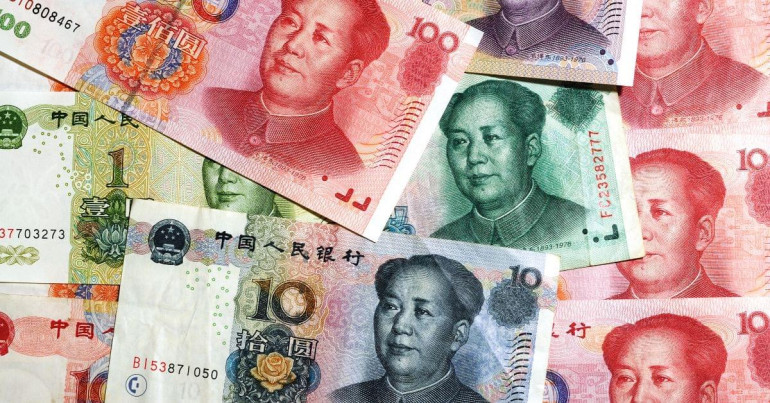
The official currency of the People's Republic of China is the Renminbi, often abbreviated as RMB. The name literally translates to "The People's Currency". However, when people talk about specific amounts of money, they use the word Yuan (CNY). Think of it this way: "Renminbi" is the name of the system (like "Sterling" in the UK), while "Yuan" is the actual unit you count (like "Pounds").
The symbol for the Yuan is ¥, the same as the Japanese Yen. To avoid confusion, you might see it written as CN¥ in international finance. The currency is issued and controlled by the People's Bank of China (PBOC), the central bank. One Yuan is further divided into smaller units called Jiao (1/10 of a Yuan) and Fen (1/100 of a Yuan), similar to how dollars are divided into dimes and cents.
What Is The History Of The Chinese Yuan Renminbi?

The story of China's modern money is a journey from chaos to becoming a global powerhouse. Here are the key milestones in its history:
- 1948 (The Beginning): The People's Bank of China was formed just before the founding of the People's Republic. They issued the first "Renminbi" to replace the worthless currencies left behind by the previous war-torn government.
- 1955 (The Reset): To fix inflation problems, a second series was launched. The government announced that one new Yuan was worth 10,000 old Yuan, simplifying daily trade for everyone.
- 1994 (The Dollar Link): For over a decade, China "pegged" the Yuan to the US Dollar. This stability helped China export goods cheaply and grow its economy rapidly.
- 2005 (Going Global): China moved away from a strict dollar peg, allowing the currency's value to float within a managed range.
- 2016 (A Major Milestone): The International Monetary Fund (IMF) officially added the Renminbi to its basket of reserve currencies, recognising it as one of the most important currencies in the world alongside the Dollar and Euro.
What Are The Denominations Of CNY?

The Chinese currency system uses both paper notes and metal coins. The most common form of cash is the Banknote.
Banknotes: The current series features the portrait of Chairman Mao Zedong on the front. They come in values of 1, 5, 10, 20, 50, and 100 Yuan. You may also find smaller, older notes for 1, 2, and 5 Jiao, though these are becoming less common as digital payments take over.

Coins: Widely used for minor change. The most common coins are the 1 Yuan, 5 Jiao, and 1 Jiao. There are even smaller coins called Fen (1, 2, and 5 Fen), but these are rarely seen in circulation today because their value is so low.
Travellers should note that while cash is legal tender, China is rapidly becoming a "cashless" society, with most daily transactions now handled via mobile apps linked to these denominations.

Kriti Barua is a skilled digital journalist and communications professional with 4+ years of experience, currently writing for the General Knowledge section at Jagran New Media. She has established herself as a subject matter expert in History, Geography, Trending National and International News, Sports, Science, and Defence, producing clear, reliable, and search-optimised content that connects with readers worldwide.
Kriti holds a BA degree from Delhi University and a one-year diploma in TV Production and Journalism, an academic background that adds research depth and strong storytelling instincts to her writing. Her experience spans brand writing, content marketing, and digital media, giving her a sharp understanding of what makes content both helpful to readers and visible in search.
At Jagran New Media, she applies this expertise to national and international news coverage, query-based articles, and in-depth pieces across her specialist subject areas. Her content is defined by easy language, factual accuracy, strong keyword strategy, and reader-friendly storytelling.