Who Was the First King to Unite North and South India?
Chandragupta Maurya was the first king to unite all of North and South India, establishing the vast Maurya Empire around 340 BC. He achieved this through superior military prowess, sophisticated diplomacy, and strategic vision, profoundly shaping India's political and cultural evolution.
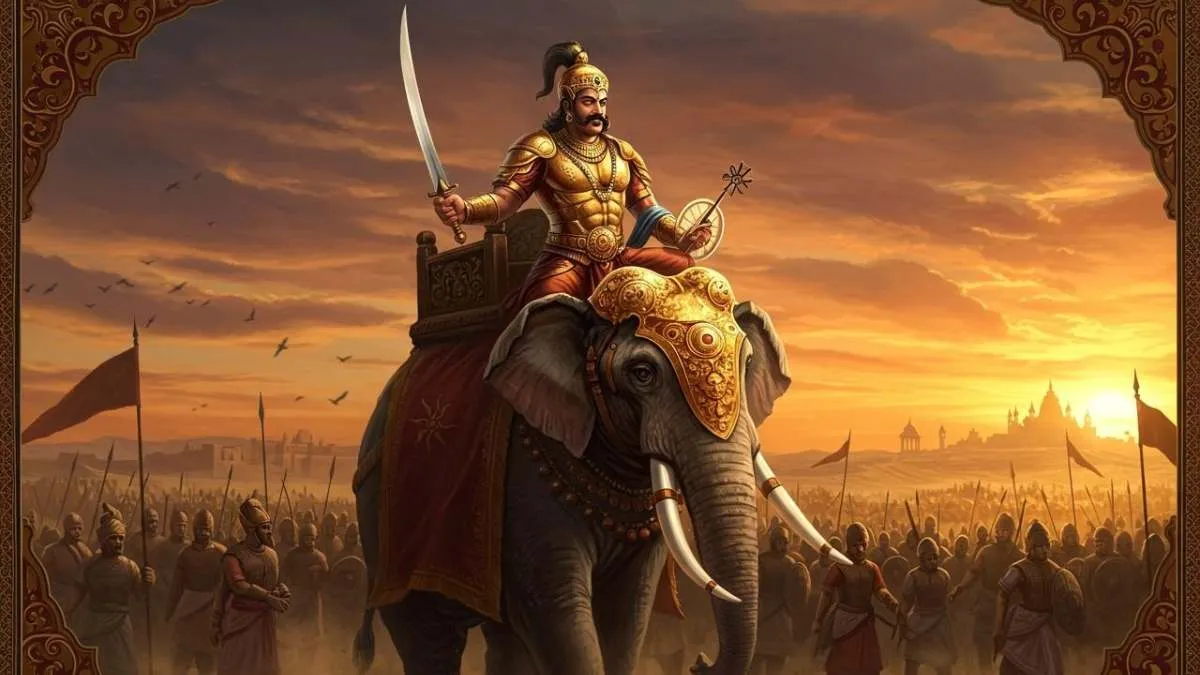
Across centuries of India’s rich and extensive past, numerous kings and kingdoms have existed on the sub-continent; however, one king’s accomplishment outshines all others because he united the two very diversified areas of North and South India within one centralized government through superior military prowess, sophisticated diplomacy, strategic vision, and superior strategic thinking.
Uniting areas possessing different cultures, languages, and governance systems would be extremely difficult for an individual leader, and by doing so, this one leader altered the course not only of Indian history but of Indian civilization forever. In examining who is this exceptional king, we provide insight into how India was first unified into a singular state, as well as the foundations and concepts of governing/administration/empire-building that would influence Indian civilization for centuries to follow.
Check Out: Who was the First King to Issue Coins in India?
Which King United North and South India?

Chandragupta Maurya is one of India’s legendary rulers who united two of the largest sections of India during his time. Around 340 BC, he founded the Maurya Empire which became one of the largest empires in Indian history. He achieved this by utilizing his strategic prowess, political skills, and military capabilities to create a large empire that extended from northern Ganges Valley through southern-most parts of India.
Chandragupta ruled over a vast area from the Ganges Valley in the north to all parts of peninsular India, where he was able to create an unprecedented level of stability across the entire Indian subcontinent during that period.
1. Defeating Important Northern Kingdoms
Chandragupta Maurya began by defeating several important northern kingdoms led by the Nanda dynasty in Magadha. By defeating the Nandas and establishing a secure base of operations in the Ganges Valley, he was able to conquer additional regions of Northern India and ultimately to secure control over all of northern India, extending his reach southward.
2. Strategically Planned Southern Campaigns
After establishing dominance in the north, Chandragupta Maurya launched his southern campaign with careful planning. The campaign focused on smaller kingdoms, combining military might with diplomacy to gradually create a unified southern empire.
3. Strong Military Organization
Chandragupta Maurya had a highly trained and disciplined army that was an essential component of the union. He used advanced strategies, the latest equipment, and skilled leadership to defeat local kings, quell revolts, and maintain control over an extended empire stretching from territorial North India to southern India.
4. Expert Guidance and Strategy
With the guidance of his advisor, Chandragupta Maurya collected intelligence on rival powers, formed alliances, and created a political strategy that enabled him to conquer his opponents. With careful planning, espionage, and diplomacy, his prolonged campaigns were reduced in length, thus reducing the cost and the toll on both sides.
Conclusion
To summarize, Chandragupta Maurya was the very first king to unite all of North and South India into an organized political entity, creating an enduring empire that impacted Indian history for thousands of years. The visionary leadership of Chandragupta Maurya continues to resonate today and has been credited with being one of the crucial factors that shaped both the political and cultural evolution of India over millennia.

Ayukta Zisha is an education journalist with over three years of experience in digital media. A graduate of St. Xavier’s College, she holds a Master’s degree in English along with a certification in Digital Marketing from IIT Delhi. Backed by a strong academic foundation in the humanities, she specializes in creating educational and general knowledge content across history, geography, literature, and current affairs. During her tenure at Jagran Josh, she worked extensively on U.S. news and global developments, curating informative and engaging content for a diverse readership. Her subject expertise and ability to simplify complex topics enable her to make complex information accessible to a wide audience. Beyond journalism, Ayukta is an avid reader and a published author.





![NIOS Hall Ticket 2026 [OUT] LIVE: Download Class 10th, 12th October Theory Admit Card at sdmis.nios.ac.in, Direct link here](https://img.jagranjosh.com/images/2026/October/16102026/NIOS-Hall-Ticket-2026.jpg)