World Jellyfish Day 2024: Purpose, Interesting Facts, and Celebrations
Celebrated on November 3, World Jellyfish Day raises awareness of the vital role jellyfish play in marine ecosystems. These ancient creatures contribute as both predators and prey, aid scientific research through their bioluminescence, and have cultural significance. The day also underscores the need for sustainable ocean conservation practices.
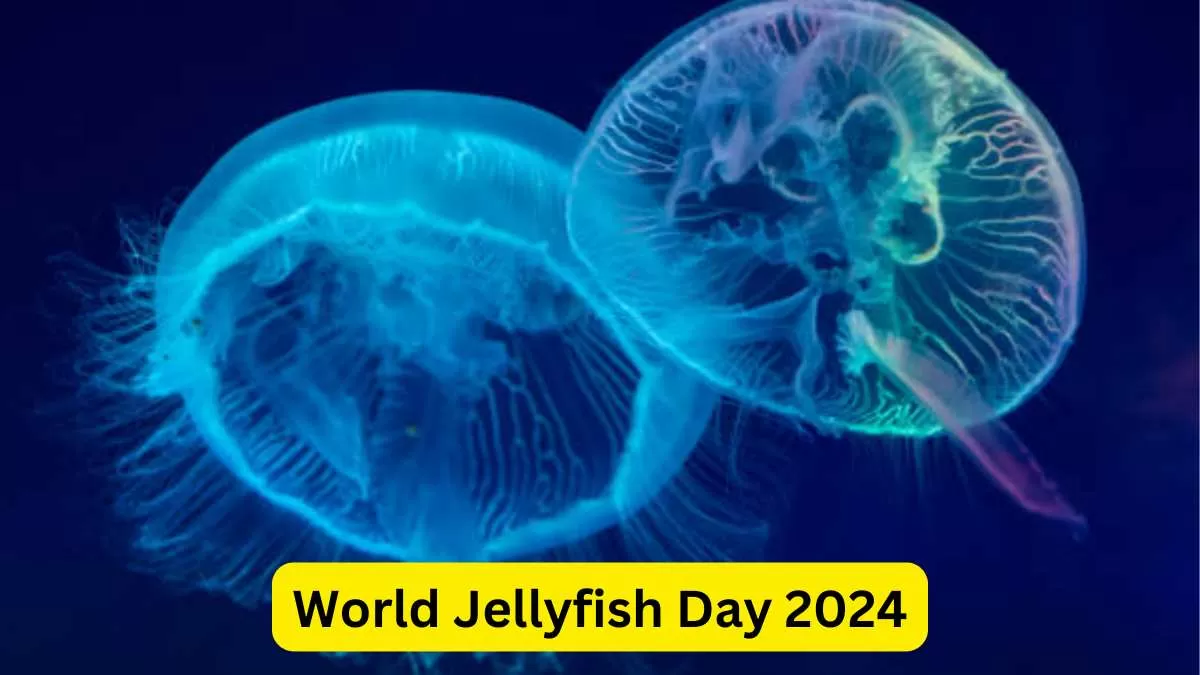
World Jellyfish Day is on November 3 to raise awareness about jellyfish and their ecological importance. Since 2014, this day brings out the importance of such ancient creatures that have existed since even before the time of the dinosaurs for over 500 million years.
Purpose
World Jellyfish Day has several purposes:
- Ecological Awareness: The role of jellyfish in maintaining the balance of marine food webs is by playing out both the predator and prey roles. They are mainly used to feed on plankton, and different species eat them, such as sea turtles and larger fish.
- Research and Conservation: The day is a call to research jellyfish biology, from the potential of its medical application, such as in the study of bioluminescent proteins. Its conservation is also being put in the limelight with climate change and habitat loss threatening jellyfish.
- Cultural Importance: In other cultures, jellyfish are considered delicacies, which are used for medicinal purposes, showing their importance other than ecological functions.
Interesting Facts
- Jellyfish are largely 95% water and do not have bones, hearts, or even a brain in the center of the body.
- They also glow in the dark. They have bioluminescent organs that can make them emit blue or green light when stimulated.
- A group of jellyfish is called a "bloom," "swarm," or "smack". These terms represent the wonders of jellyfish.
Celebrations
World Jellyfish Day may be celebrated through:
- Educational activities: Engagement in activities that raise the awareness of the marine ecosystem.
- Local conserved efforts aimed at the conservation of marine life.
Jellyfish emit various shades of light through a chemical reaction involving some molecules and enzymes. The two key products that cause the bioluminescence of jellyfish are luciferin and luciferase.\
Production Process of Color
Chemical Reaction:
The luciferin and oxygen combine with the help of an enzyme called luciferase, and it produces light. This reaction can result in various colors based on the types of luciferin and luciferase that are involved and also varies with the environmental conditions.
The light emitted can be blue, green, or any of the colors that are more commonly seen in marine bioluminescence because those wavelengths travel best through water.
Varieties of Luciferin:
There are many types of luciferin in different organisms, hence different colors are produced. Some jellyfish contain a particular luciferin called coelenterazine, and it is known to produce blue-green light.
The light color emitted is determined by the specific chemical structure of luciferin; thus, differences in these molecules can lead to differences in bioluminescence color among different species.
Environmental factor:
The environment determines also the color perceived of light emitted. For example, blue light is more effective for communication and predation in deep-sea environments where sunlight does not penetrate.
Today is World Jellyfish Day, a quirky observance. Remind people of intricate connections existing in marine ecosystems and the urgent need for sustainable practices aimed at healthy oceans.

Kirti Sharma is a journalist in the education domain with three and a half years of experience creating high-quality content for the education technology (EdTech) and digital media industries. She has an expertise in covering education news. Kirti has experience in writing data backed informational pieces on General knowledge.
Kirti holds a Bachelor of Arts degree, which helped build her strong foundation in writing and research. Over the course of her career, she has brought her skills to a variety of well-known companies, including ThoughtPartners Global, Infinite Group, and MIM-Essay. Through these roles, she has learned how to take complex information and turn it into engaging, easy-to-understand content for readers online.

-1790333480056_t.webp)




![[Link Active] RRB NTPC UG CBT 2 Answer Key 2026 LIVE: Download CEN 07/2025 Response Sheet PDF](https://img.jagranjosh.com/images/2026/September/2492026/RRB-NTPC-UG-CBT-2-Answer-Key-2026.jpg)