UK Board Class 11 Psychology Syllabus 2025-26: Download FREE PDF
UK Board Class 11 Psychology Syllabus 2025-26: Students preparing for UK Board 2026 exam can check this article to download the UK Board Psychology Syllabus 2025-26 PDF for class 11.
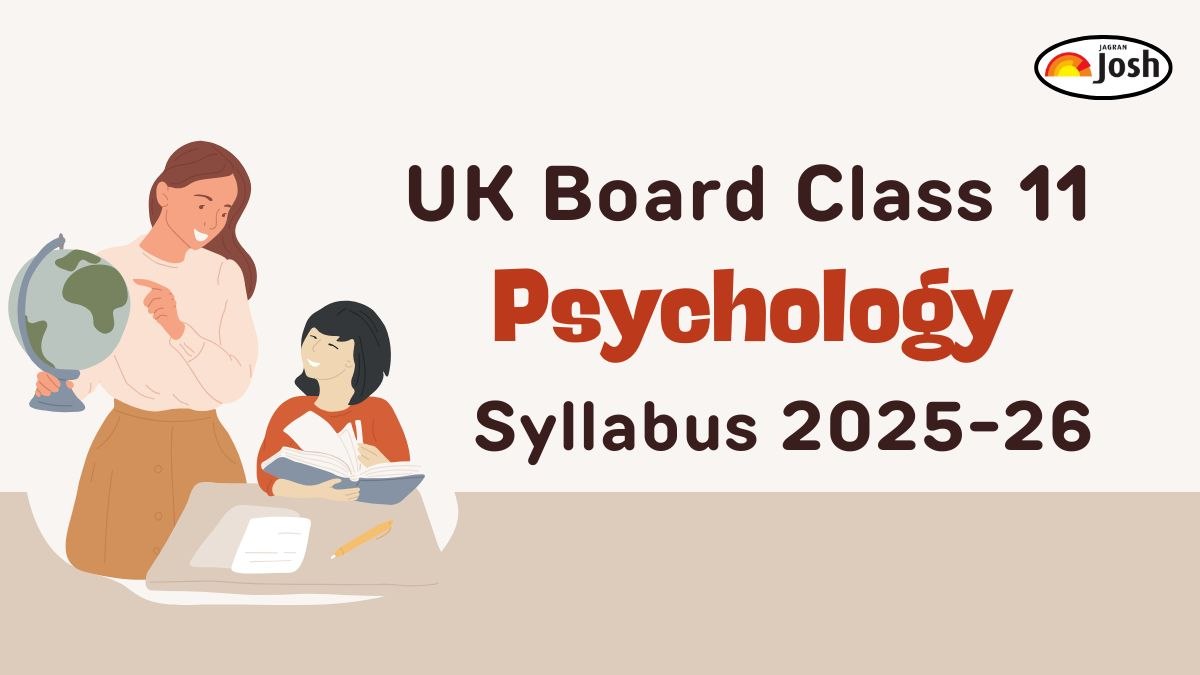
The Class 11 Psychology syllabus, prescribed by the Uttarakhand Board of School Education (UBSE) for the 2025-26 academic session, is designed to introduce students to the scientific study of human experience, behaviour, and mental processes.
As an elective subject at the higher secondary level, this course serves as a fundamental foundation for understanding the nature of psychological knowledge and its application in various aspects of life.
Course Aims and Focus
This syllabus aims to create interest and familiarize learners with the basic ideas, principles, theories, and methods in Psychology. The primary goals are to:
-
Understand Mind and Behaviour: Explore the fascinating world of how people think, feel, and act in different situations.
-
Develop Scientific Thinking: Introduce the Methods of Enquiry in Psychology (Unit II), which is crucial for conducting scientific research and analysis of psychological data.
-
Promote Self-Reflection: Enable students to become perceptive, socially aware, and self-reflective individuals, fostering personal growth and effectiveness.
UK Board Class 11 Psychology Syllabus 2026: Key Highlights
| Board | Uttarakhand Board of School Education (UBSE) |
| Class | 11 |
| Academic Year | 2025-26 |
| Subject | Psychology |
| Theory Marks | 70 |
| Practical Marks | 30 |
| Total Marks | 100 |
UBSE Class 11 Psychology Syllabus 2025-26
| Unit | Topic | Marks |
| I | Understanding Psychology | 11 |
| II | Methods of Enquiry in Psychology | 13 |
| III | Human Development | 11 |
| IV | Sensory, Attentional and Perceptual Processes | 8 |
| V | Learning | 9 |
| VI | Human Memory | 8 |
| VII | Thinking | 5 |
| VIII | Motivation and Emotion | 5 |
| Total | 70 |
Unit I: Understanding Psychology The topics in this unit are:
1. Introduction
2. Nature of Psychology:
● Psychology as a Discipline
● Psychology as a Natural Science
● Psychology as a Social Science
3. Understanding Mind and Behaviour
4. Popular Notions about the Discipline of Psychology
5. Evolution of Psychology
6. Development of Psychology in India
7. Branches of Psychology
8. Psychology and Other Disciplines
9. Psychology in Everyday Life
Unit II: Methods of Enquiry in Psychology The topics in this unit are:
1. Introduction
2. Goals of Psychological Enquiry
● Steps in Conducting Scientific Research
● Alternative Paradigms of Research
3. Nature of Psychological Data
4. Some Important Methods in Psychology
● Observational Method
● Experimental Method
● Correlational Research
● Survey Research
● Psychological Testing
● Case Study
5. Analysis of Data
● Quantitative Method
● Qualitative Method
6. Limitations of Psychological Enquiry
7. Ethical Issues
Unit III: Human Development The topics in this unit are:
1. Introduction
2. Meaning of Development
● Life-Span Perspective on Development
3. Factors Influencing Development
4. Context of Development
5. Overview of Developmental Stages
● Prenatal Stage
● Infancy
● Childhood
● Challenges of Adolescence
● Adulthood and Old Age
Unit IV: Sensory, Attentional and Perceptual Processes The topics in this unit are:
1. Introduction
2. Knowing the world
3. Nature and varieties of Stimulus
4. Sense Modalities
● Functional limitation of sense organs
5. Attentional Processes
● Selective Attention
● Sustained Attention
6. Perceptual Processes
● Processing Approaches in Perception
7. The Perceiver
8. Principles of Perceptual Organisation
9. Perception of Space, Depth and Distance
● Monocular Cues and Binocular Cues
10. Perceptual Constancies
11. Illusions
12. Socio-Cultural Influences on Perception
Unit V: Learning The topics in this unit are:
1. Introduction
2. Nature of Learning
3. Paradigms of Learning
4. Classical Conditioning
● Determinants of Classical Conditioning
5. Operant/Instrumental Conditioning
● Determinants of Operant Conditioning
● Key Learning Processes
6. Observational Learning
7. Cognitive Learning
8. Verbal Learning
9. Skill Learning
10. Factors Facilitating Learning
11. Learning Disabilities
Unit VI: Human Memory The topics in this unit are:
1. Introduction
2. Nature of memory
3. Information Processing Approach : The Stage Model
4. Memory Systems : Sensory, Short-term and Long-term Memories
5. Levels of Processing
6. Types of Long-term Memory
● Declarative and Procedural; Episodic and Semantic
7. Nature and Causes of Forgetting
● Forgetting due to Trace Decay, Interference and Retrieval Failure
8. Enhancing Memory
● Mnemonics using Images and Organisation
Unit VII: Thinking The topics in this unit are:
1. Introduction
2. Nature of Thinking
● Building Blocks of Thought
3. The Processes of Thinking
4. Problem Solving
5. Reasoning
6. Decision-making
7. Nature and Process of Creative Thinking
● Nature of Creative Thinking
● Process and strategies of Creative Thinking
8. Thought and Language
9. Development of Language and Language Use
Unit VIII: Motivation and Emotion The topics in this unit are:
1. Introduction
2. Nature of Motivation
3. Types of Motives
● Biological Motives
● Psychosocial Motives
4. Maslow’s Hierarchy of Needs
5. Nature of Emotions
6. Expression of Emotions
● Culture and Emotional Expression
● Culture and Emotional Labeling
7. Managing Negative Emotions
8. Enhancing Positive Emotions
UK Board Class 11 Psychology Practical Syllabus 2026
| Topics | Marks |
| Practical (Experiments) file | 4 |
| Project File | 4 |
| Viva Voce (Project and experiment) | 5 |
| One experiment (04 marks for conduction of experiment and 08 marks for reporting) | 12 |
| Continuous Assessment(Unit Test) | 5 |
| Total | 30 |
UK Board Class 11 Psychology Syllabus 2025-26: Download PDF |
Also Check:
UK Board Class 11 Geography Syllabus 2025-26
UK Board Class 11 History Syllabus 2025-26
UK Board Class 11 English Syllabus 2025-26
UK Board Class 11 Hindi Syllabus 2025-26

Apeksha Agarwal is an Education Journalist with over 3.5 years of experience. She covers a wide range of topics, including school board examinations, entrance tests, admissions, results, scholarships, and higher education updates. Over the years, she has closely tracked major examinations such as JEE Main, NEET UG, CUET, and various state-level entrance exams, helping students stay informed throughout their academic journey. Apeksha has a Master's degree in Journalism and Mass Communication and a certificate in Digital Journalism. She is passionate about transforming complex educational developments into clear, accessible, and useful information. Her reporting focuses on providing students, parents, and educators with accurate updates and practical insights on examinations, results, and policy changes. She believes that quality education journalism can make a meaningful difference by helping students make informed decisions about their future.