Which Is the Largest Planet in the Solar System?
Jupiter is the largest planet in the solar system, known for its massive size, strong gravity, powerful storms and many moons. Keep reading more topics like this.
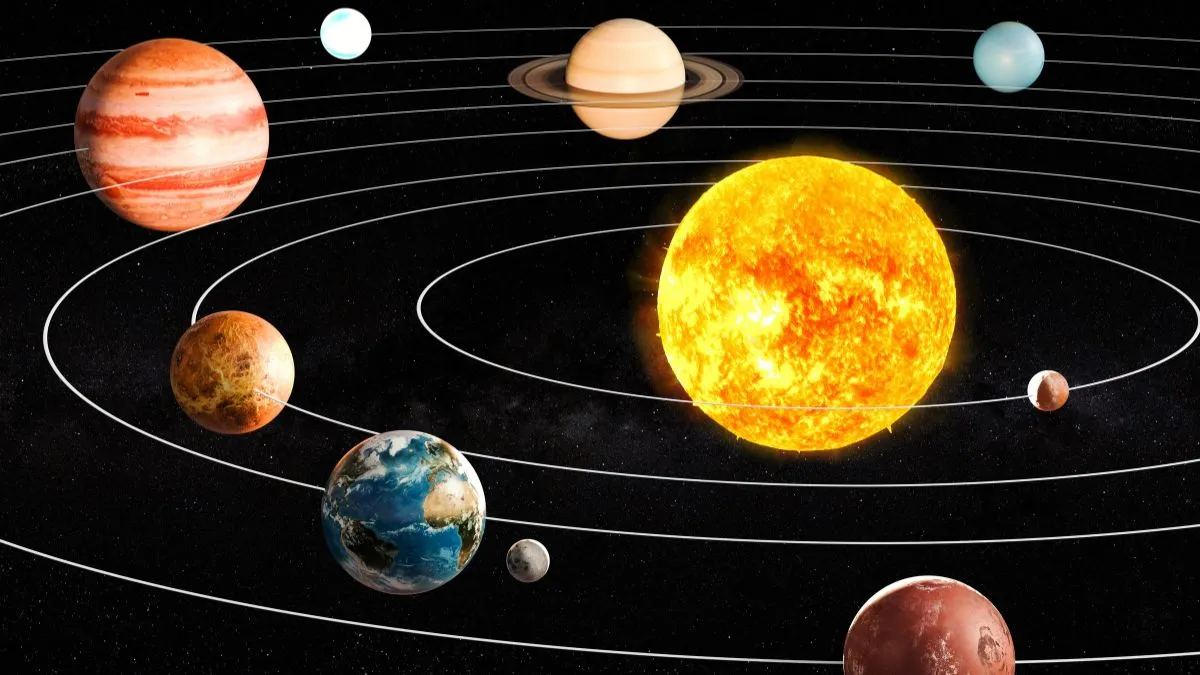
Largest Planet in the Solar System: Jupiter is the largest planet in the solar system. It is the biggest in diameter, mass, and volume, and it is so large that all the other planets could fit inside it combined.
Why Is Jupiter the Largest Planet?
Jupiter is a gas giant formed early in the solar system’s history. Its strong gravity allowed it to capture vast amounts of hydrogen and helium. This early formation and massive gravitational pull are the main reasons for its enormous size.
Size and Diameter of Jupiter
Jupiter has an average diameter of about 139,820 kilometres, making it more than 11 times wider than Earth. In terms of volume, Jupiter could contain over 1,300 Earths, showing its extreme scale.

Mass of Jupiter
Jupiter’s mass is more than two times the combined mass of all other planets in the solar system. Its gravitational influence extends far beyond its orbit and affects asteroid belts and comet paths.
Composition of Jupiter
Jupiter is mainly composed of hydrogen and helium, similar to the Sun. Beneath its cloud layers, hydrogen exists in liquid and metallic forms due to intense pressure. Scientists believe Jupiter may have a dense core at its centre.
Moons and Ring System of Jupiter
Jupiter has the largest number of moons in the solar system, including major moons such as Io, Europa, Ganymede, and Callisto. It also has a faint ring system made of dust particles, though it is not as prominent as Saturn’s rings.
Atmospheric Features of Jupiter
Jupiter’s atmosphere is known for its colourful cloud bands, powerful winds, and massive storms. The most famous is the Great Red Spot, a storm that has lasted for centuries and is larger than Earth.
Role of Jupiter in the Solar System
Jupiter acts as a gravitational shield by attracting or deflecting asteroids and comets that could otherwise impact inner planets. Its presence has played a major role in shaping the solar system’s structure.

Interesting Facts About Jupiter
Largest by Size and Volume
Jupiter is the largest planet by diameter and volume. Its enormous size makes it the most dominant object in the solar system after the Sun.
Strongest Gravitational Force
Jupiter has the strongest gravity of all planets. This gravity controls the motion of its moons and significantly influences nearby space objects.
Fastest Rotating Planet
Jupiter completes one rotation in about 10 hours, making it the fastest-rotating planet. This rapid rotation causes the planet to bulge at the equator.
Highest Number of Moons
Jupiter has more than 90 confirmed moons, more than any other planet. Some of its moons are larger than the planet Mercury.
Extreme Weather Conditions
Jupiter experiences extremely strong winds, some exceeding 600 km/h. Its storms can last for decades or even centuries.
Read more: Which Is the Fastest Planet in the Solar System?
Jupiter is the largest planet in the solar system. Jupiter has the strongest magnetic field among planets. It creates intense radiation belts that are dangerous for spacecraft and much stronger than Earth’s.

Jasreet Kaur is a journalist with over 3 years of experience in digital media and news content creation. She specializes in covering Trending News, including major National and International developments, with a focus on delivering accurate, engaging, and reader-friendly stories. Prior to this, she worked with Zee News as a Content Writer, where she gained extensive experience in news reporting and content strategy. Driven by curiosity, credibility, and a passion for impactful journalism, Jasreet aims to contribute to informed public discourse while supporting positive growth in organizations, society, and the world.


-1792761794673_t.webp)




.jpg)

![[OUT] UPSSSC PET Admit Card 2026 LIVE: यूपी पीईटी एडमिट कार्ड जारी, upsssc.gov.in पर Direct Link](https://img.jagranjosh.com/images/2026/October/15102026/UPSSSC-PET-Admit-Card-2026.jpg)