List of Top 7 Longest Ruling Dynasties in India
India's history is shaped by powerful, long-ruling dynasties like the Chera, Pandya, Chola, and Ahom. These empires including the Satavahana, Mughal, and Gupta ruled for centuries, leaving lasting legacies in administration, culture, architecture, and trade. Their contributions and timelines are essential for understanding the subcontinent's political evolution and preparing for competitive examinations.
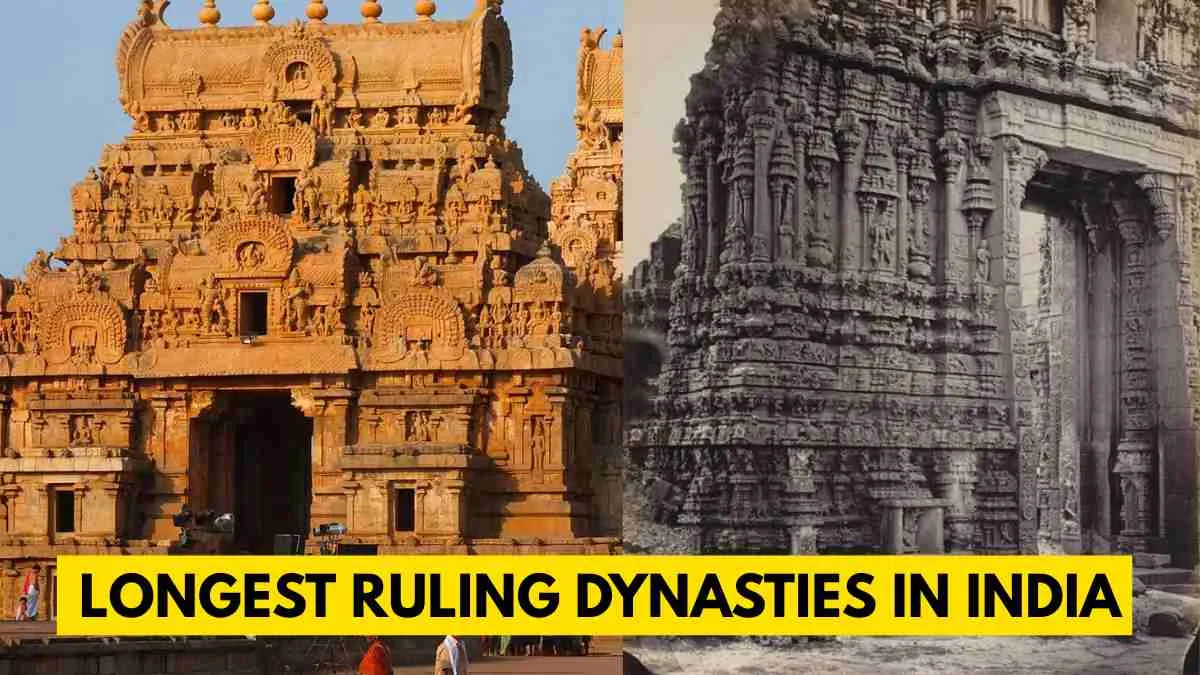
The political structure of India has emerged from numerous powerful dynasties many of whom maintained their rule for extended periods, creating strong legacies throughout the region in terms of administration, cultural practices, architectural achievement, economic stability and religious beliefs. Because of the influence of these large dynasties, it is important to know which dynasties dominated India for the most extended time for students.
Each of these powerful dynasties impacted Indian trade, military tactics, and cultural traditions that persist today. The following is a listing of the Seven Most Important Dynasties in Indian History that Ruled for the Longest Period of Time based on Length of Time, Land Mass and Continuation of Political Authority, which can serve as a guide to adequately prepare for examinations about Old India and Medieval India.
Check Out: List of Top 6 Longest Ruling Kings in World History
Top 7 Longest Ruling Dynasties in India
Here are the top 7 longest ruling dynasties in India based on the information by the National Council of Educational Research and Training:
| Rank | Dynasty | Timeline | Region / Area of Rule |
| 1 | Chera Dynasty | c. 3rd century BCE - 12th century CE | Kerala, Western Tamil Nadu, Western Coast |
| 2 | Pandya Dynasty | c. 4th century BCE - 17th century CE | Tamil Nadu (Madurai region), Southern India |
| 3 | Chola Dynasty | c. 3rd century BCE - 13th century CE | Tamil Nadu, Sri Lanka, Maldives, Southeast Asian expeditions |
| 4 | Ahom Dynasty | 13th century - 19th century | Assam, Brahmaputra Valley |
| 5 | Satavahana Dynasty | c. 1st century BCE - 3rd century CE | Deccan region: Maharashtra, Andhra Pradesh, Telangana |
| 6 | Mughal Empire | 1526 - 1857 | Northern India, Central India, parts of the Deccan, Afghanistan (early) |
| 7 | Gupta Empire | c. 3rd century - 6th century CE | North India, Central India, Bengal region |
1. Chera Dynasty

Chera dynasty ruled for approximately 1500 years and is one of the oldest continuous dynasties in India.
It governed over 2 centuries (c. 3rd century BC - c. 12th Century AD). The Cheras were the rulers of many important ports along the west coast of India. The Cheras were involved in the Indo-Roman spice trade. The contributions of the Cheras to early Tamil literature, maritime commerce, etc., are detailed here.
2. Pandya Dynasty

Pandyas, like Cheras, ruled for a long time (about 1300 years) over Tamil Nadu.
Their rule is marked by their trade with Rome, their maritime strength, and by the patronage of Tamil literature. There were three major periods of Pandyan rule - Early (c. 4th century BC to c. 1 CE), Medieval (c. 1 CE to c. 1000 CE), and later (c. 1000 - c. 1700 CE).
3. Chola Dynasty

Chola dynasty ruled for about 1000 years.
As a ruling king, the Cholas were famous for their temple construction (especially Brihadeeswara), as well as for developing a complex administrative system, bronze work and building the largest naval fleet of all time. The rule of Rajaraja Chola I (c. 985–1014 CE) and Rajendra Chola I (c.1014–1044 CE) saw the greatest extent of Indian maritime conquests.
4.Satavahana Dynasty
The Satavahanas ruled for about 450 years.
They governed the Deccan area (present-day Andhra Pradesh and Maharashtra) in India. They created a united Deccan region after the disappearance of the Mauryan empire. The Satavahanas were responsible for the promotion of trade and Buddhism, along with helping people learn to read and write Prakrit.
Conclusion
India’s longest-ruling dynasties shaped its administration, culture, architecture, and identity across centuries. Knowing their contributions and timelines is essential for competitive exams and for understanding the evolution of the subcontinent’s political history.
Ayukta Zisha is an education journalist with over three years of experience in digital media. A graduate of St. Xavier’s College, she holds a Master’s degree in English along with a certification in Digital Marketing from IIT Delhi. Backed by a strong academic foundation in the humanities, she specializes in creating educational and general knowledge content across history, geography, literature, and current affairs. During her tenure at Jagran Josh, she worked extensively on U.S. news and global developments, curating informative and engaging content for a diverse readership. Her subject expertise and ability to simplify complex topics enable her to make complex information accessible to a wide audience. Beyond journalism, Ayukta is an avid reader and a published author.


-1792899332774_t.webp)

-1792894489918_t.webp)

.jpg)
![[OUT] UPSSSC PET Admit Card 2026 LIVE: यूपी पीईटी एडमिट कार्ड जारी, upsssc.gov.in पर Direct Link](https://img.jagranjosh.com/images/2026/October/15102026/UPSSSC-PET-Admit-Card-2026.jpg)