What are the Differences Between LED and LCD?
Confused between LED and LCD displays? You’re not alone—most people are! In this simple and engaging read, we compare LED and LCD technology, covering aspects like picture quality, power consumption, cost, and durability. By the end, you’ll know exactly which one suits your lifestyle and budget.
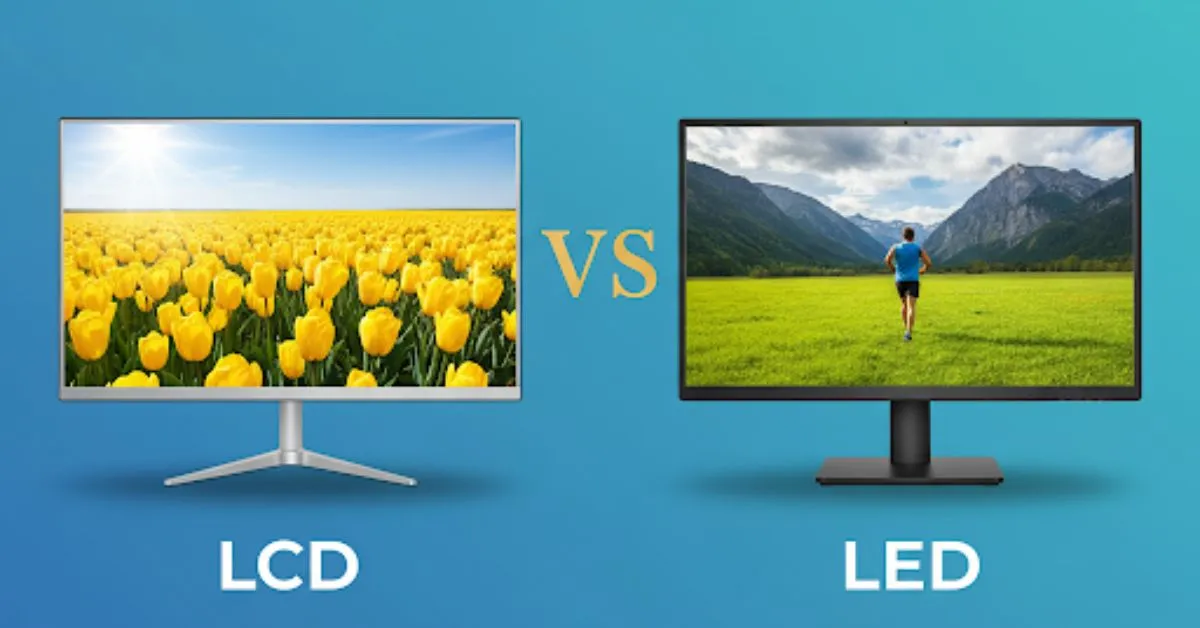
When it comes to choosing a television or computer monitor there are two terms that are quite confusing which are LED and LCD. At first look, these two screens look similar however there are a few differences as to how they work, their picture quality and energy efficiency. So, it is important to understand these differences to help make the right choice when looking for a display.
READ| Differences between Enquiry and Inquiry
What is LCD?
LCD stands for Liquid Crystal Display. As the name suggests, it uses liquid crystals to display images on the screen. These crystals do not produce light on their own; instead, they work like tiny shutters, either blocking or allowing light to pass through. Behind the liquid crystals, there is a backlight, usually made of fluorescent lamps, that provides brightness to the screen.
In short, an LCD display has two main parts:
- Liquid crystals that form the image.
- Cold Cathode Fluorescent Lamps (CCFLs) at the back that provide light.
LCD technology has been widely used in computer monitors, calculators, digital watches, and earlier flat-screen televisions.
What is LED?
LED stands for Light Emitting Diode. When we talk about them in context of screens LED display is majorly similar to LCD. The major difference is the backlight. Instead of using fluorescent lamps, LED displays use tiny light-emitting diodes that provide brightness.
What are the Key Differences Between LED and LCD?
Here are the main areas where LED and LCD displays differ:
| Feature | LCD (Liquid Crystal Display) | LED (Light Emitting Diode) |
| Backlight | Uses CCFL (Cold Cathode Fluorescent Lamp) | Uses LED (Light Emitting Diode) |
| Picture Quality | Good but limited contrast, not very deep blacks | Better contrast, deeper blacks, more vibrant colors |
| Energy Consumption | Higher, less energy-efficient | Lower, more energy-efficient |
| Design & Thickness | Bulkier due to fluorescent lamps | Slim, lightweight, modern design |
| Lifespan | Shorter (lamps dim over time) | Longer, LEDs are more durable |
| Viewing Angles | Narrower, quality drops when viewed from sides | Wider, especially in IPS LED panels |
| Price | Generally cheaper | More expensive than LCD |
| Applications | Calculators, clocks, older monitors & TVs | Modern TVs, laptops, smartphones, digital signage |
In conclusion, in today’s market, most televisions and monitors are LED because they combine the benefits of LCD technology with the advantages of LED lighting, making them the preferred option for everyday use.
READ| Difference Between Beside and Besides

Nikhil is a dedicated digital journalist and communications professional with more than five years of experience, currently working within the General Knowledge section at Jagran Josh. He has established himself as a subject matter expert in Finance, Economy, History, Technology, and Trending News, consistently delivering accurate, engaging, and easy-to-read content for a wide global audience.
Over the course of his career, Nikhil has developed deep expertise in crafting informative listicles, viral trending stories. His editorial portfolio also spans finance, historical research, and technology reporting, making him a versatile and well-rounded content professional. Every piece he produces reflects a strong balance between factual accuracy and reader engagement.