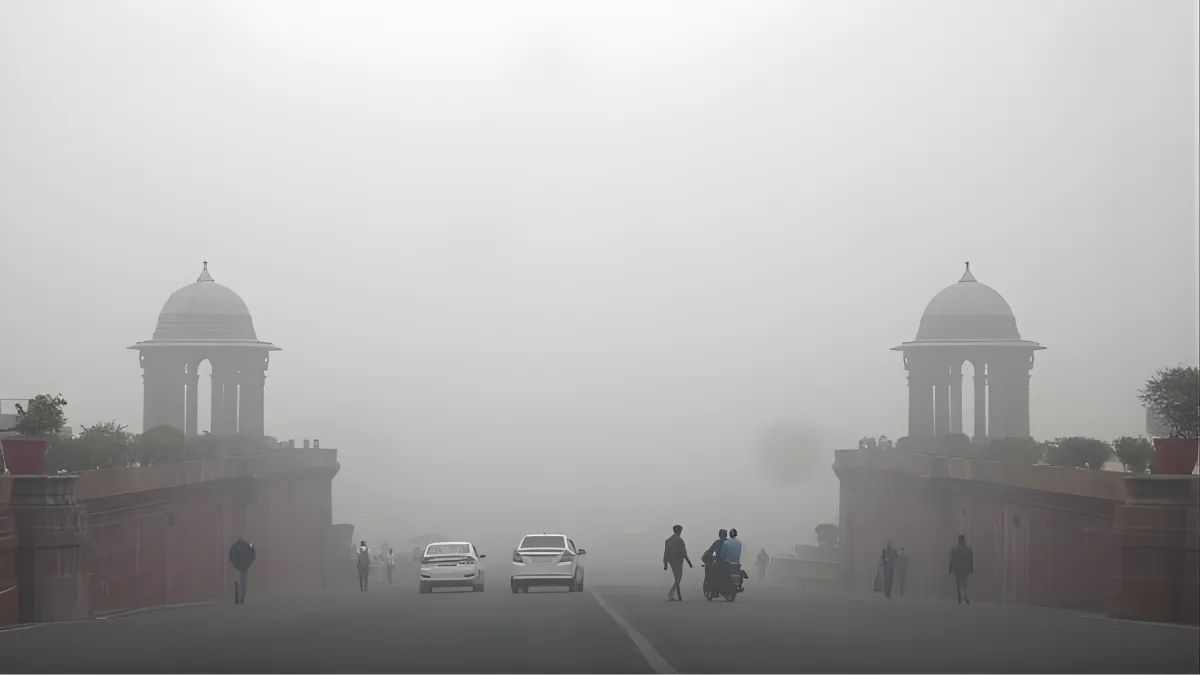
Delhi’s air quality has ranged from “beyond index” hazardous levels—where instruments max out to relatively clean “satisfactory” days in recent years. Official CPCB-based data and closely tracked analyses suggest that while single-station AQI values have reportedly touched four‑digit extremes on some days, nationally accepted reporting caps the 24‑hour citywide AQI at 500, with recent worst days in the “severe-plus” band and rare best days in the 50–60 range.
Understanding “Highest Ever” vs Officially Reported AQI
-
The Indian National AQI scale goes from 0 to 500; anything above 400 is “severe,” and 500 is the upper reporting limit on the CPCB Sameer app and official bulletins.
-
Some sensors and third‑party dashboards have displayed values above 1,000, but these are not treated as official CPCB AQI; they often come from different index formulas or extrapolated data.
Because of this, discussions of “highest ever AQI” in Delhi must distinguish between:
Official 24‑hour citywide AQI (CPCB).
-
Station‑level peaks at individual monitors (e.g., Wazirpur, Rohini), which sometimes hit 500 (the maximum recordable value).
-
Unofficial/alternate index values reported by private platforms that may exceed 500 or even 1,000.
Highest Citywide 24‑Hour AQI in Recent Official Records
-
CPCB-based reporting indicates that on some of the worst days since the index began (2015), the overall Delhi AQI has hovered close to 500, with many stations at the maximum value of 500.
-
For example, coverage in 2024 noted that November 18’s average AQI of 494 was the second‑highest citywide AQI since the index was introduced, with several stations pinned at 500.
-
In December 2025, Delhi again saw a citywide AQI of 461, with Wazirpur and Rohini stations reaching the maximum possible AQI value of 500, marking the second‑worst December air day on record and the worst of that winter season.
Lowest AQI Ever Recorded in Delhi (Official Data Perspective)
Because Delhi’s AQI has rarely fallen into the “Good” category (0–50) in the last decade, “lowest ever” tends to refer to:
1. Cleanest Individual Day in Recent Years
-
In July 2025, the Commission for Air Quality Management (CAQM) and CPCB stated that Delhi recorded its lowest AQI of the year at 59, in the “Satisfactory” range—described as the cleanest day of the year.
-
On that day, five of Delhi’s 13 pollution hotspots even recorded “Good” AQI values (e.g., Vivek Vihar at 35, Dwarka at 40, Jahangirpuri at 47).
2. Cleanest Month and Long-Term Lows
-
The same July 2025 period delivered the cleanest July in over a decade, with a monthly average AQI of 79, the lowest since at least 2015.
-
Other analyses note that in some monsoon spells, Delhi’s AQI has dipped into the 50–70 band, but truly “Good” (<50) citywide averages remain extremely rare.
Check out: What is the Full Form of ATM? Know the History and Functions
Extremes in Delhi AQI (Indicative)
| Metric / Event | AQI Level | Source |
| Station‑level peak (unofficial analysis, 2024) | ~795 | Blog analysis of 18 Nov 2024; beyond CPCB 500 cap. |
| Global index spike (Nov 2019 drizzle episode) | 1,200+ (alt index) | Economic Times; non‑CPCB index reading. |
| Highest citywide AQI (CPCB era, examples) | ~494 (Nov 2024) | Second‑highest since index started (2015). |
| Worst December day (recent) | 461 (Dec 2025) | Second‑worst December on record; multiple stations at 500. |
| Cleanest day in 2025 | 59 (July 2025) | “Satisfactory”; several hotspots in “Good” range. |
| Cleanest July in a decade | Avg. 79 (July 2025) | Lowest July average since 2015. |
1. What AQI range is considered “Good” or “Severe” in India?
According to CPCB:
-
0–50: Good
-
51–100: Satisfactory
-
101–200: Moderate
-
201–300: Poor
-
301-400: Very Poor
-
401–500: Severe (often termed “Severe+” near 500).
2. Why do some sites show AQI greater than 1,000 for Delhi?
Different platforms might use:
-
Different AQI Scales/Formulae
-
Raw PM2.5 concentration maps converted into alternative indices.
-
Thus, they can show values far above 500, but the official CPCB reporting clips at 500, so those larger numbers are not used in Indian regulatory decisions.
3. Why do Delhi’s worst AQI days fall within November–December?
Key drivers:
-
Stubble burning in Punjab–Haryana.
-
Temperature inversion, calm winds, and high humidity trap pollutants.
-
Festival fireworks, traffic, and local emissions adding to the load.
4. Which conditions gave rise to the cleanest days in July 2025?
-
Persistent monsoon rains, favourable wind patterns and strong dispersion.
-
Policy and enforcement measures relating to construction dust and industrial emissions.
-
Actions by CAQM and the Delhi government combined with meteorology kept AQI in the "Satisfactory" band for 15 continuous days.
WHAT'S NEXT| List of Top 7 Animals that Sleep the Most: Ranked




-1765790605124.jpg)

Comments
All Comments (0)
Join the conversation