International Human Solidarity Day 2025: Date, Theme, History and Global Significance
Observed on December 20, International Human Solidarity Day 2025 highlights unity as a core global value. With a focus on sustainable development, the day emphasizes collective action to tackle poverty, inequality, health gaps, and climate challenges through international cooperation and shared responsibility.
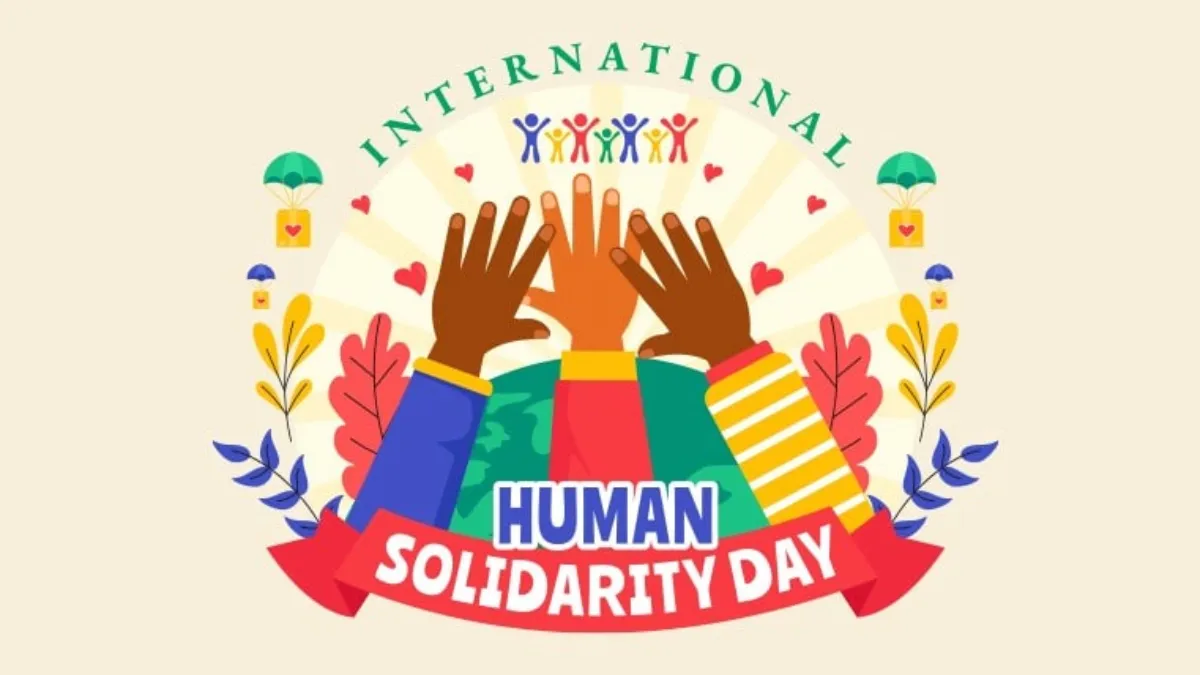
International Human Solidarity Day is celebrated annually on 20 December to mark the core value of solidarity in international relations and a driving force to achieve sustainable development and social justice. In 2025, the theme of the day is how unified communities can strengthen resilience to global issues such as poverty, inequality, climate change and health crises among others.
UN Background and Date
-
Date: 20 December of each year, including 20 December 2025.
-
The date had been selected to commemorate the establishment of the World Solidarity Fund through the UN General Assembly on 20 December 2002.
-
On 22 December 2005, the UN General Assembly (Resolution 60/209) proclaimed 20 December as International Human Solidarity Day, recognizing solidarity as a universal value for the 21st century.
Theme for International Human Solidarity Day 2025
The theme generally mentioned for 2025 is:
"Solidarity for Sustainable Development: Uniting Communities for a Shared Future."
This theme underscores:
-
A connection of solidarity to the Sustainable Development Goals.
-
The need to unite communities across borders, to address poverty, health gaps, climate risks, and social inequality.
History and Origin
-
The day originates from the UN Millennium Declaration of 2000 that named solidarity-along with freedom, equality, tolerance, respect for nature, and shared responsibility-as a fundamental value for international relations.
-
To operationalize this value, the World Solidarity Fund was established in 2002 as a UN trust fund for the eradication of poverty and social development in the poorest countries, initially managed by UNDP.
In 2005, the UN General Assembly proclaimed the International Human Solidarity Day to:
-
Raise awareness about solidarity.
-
Urge governments to uphold international commitments.
-
Promote initiatives that contribute to achieving the SDGs and combating exclusion.
Read more: Which Hill Station Is Known as the Queen of Hills?
Significance and Objectives
International Human Solidarity Day serves several purposes:
-
Unity in Diversity: It recognizes that despite cultural, religious, and national differences, humanity shares common challenges and destinies.
-
Poverty Reduction: Supports the global efforts toward eradicating extreme poverty, SDG 1; hunger, SDG 2; and reducing inequalities, SDG 10.
-
SDG 17: Strengthen Global Cooperation - calls for partnerships among countries, NGOs, communities, and individuals to address crises from pandemics to conflict and climate change.
-
Social Protection and Health Equity: It highlights universal access to healthcare, education, and social safety nets, especially in the most vulnerable communities.
How the Day is Observed
United Nations and Agencies: Organize high-level events, panel discussions, campaigns, and statements highlighting the role of solidarity in achieving SDGs.
Governments and NGOs:
-
Launch policy dialogues, charity drives, awareness campaigns, and community outreach programmes.
-
Showcase successful initiatives of solidarity, such as disaster relief, refugee support, or local social enterprises.
Public Engagement:
-
Volunteering, fundraising, and using social media on #InternationalHumanSolidarityDay.
-
Educational activities in schools and colleges to discuss topics such as global justice and shared responsibility.
Read more: Which Waterfall Is Known as the Niagara of India?

Kirti Sharma is a journalist in the education domain with three and a half years of experience creating high-quality content for the education technology (EdTech) and digital media industries. She has an expertise in covering education news. Kirti has experience in writing data backed informational pieces on General knowledge.
Kirti holds a Bachelor of Arts degree, which helped build her strong foundation in writing and research. Over the course of her career, she has brought her skills to a variety of well-known companies, including ThoughtPartners Global, Infinite Group, and MIM-Essay. Through these roles, she has learned how to take complex information and turn it into engaging, easy-to-understand content for readers online.


-1792761794673_t.webp)
.jpg)
![[OUT] UPSSSC PET Admit Card 2026 LIVE: यूपी पीईटी एडमिट कार्ड जारी, upsssc.gov.in पर Direct Link](https://img.jagranjosh.com/images/2026/October/15102026/UPSSSC-PET-Admit-Card-2026.jpg)