Which Flower is known as the Smiley Flower?
The Pansy, or Viola × wittrockiana, is famously known as the "Smiley Flower." This cheerful bloom gets its name from the distinctive, dark blotch at the centre of its five petals, which creates a charming, face-like pattern.
The world is full of beautiful flowers. They come in countless shapes, sizes, and colours. These lovely blooms make our planet vibrant. Did you know there are over 400,000 types of flowering plants worldwide? Some flowers have fun nicknames. For example, the Plumeria is often called the "Lei Flower". The bright Gerbera Daisy is sometimes known as the "African Daisy." But there is one special flower known as "Out to the Smiley". This flower has large, bright petals, often with dark, eye-like markings that create the famous "smiley" or "face" effect. Do you know which flower is known as "Out to the Smiley"? In this article, we'll take a look at the history, meaning, and surprising facts about this famously cheerful flower.
Which Flower is known as the Smiley Flower?
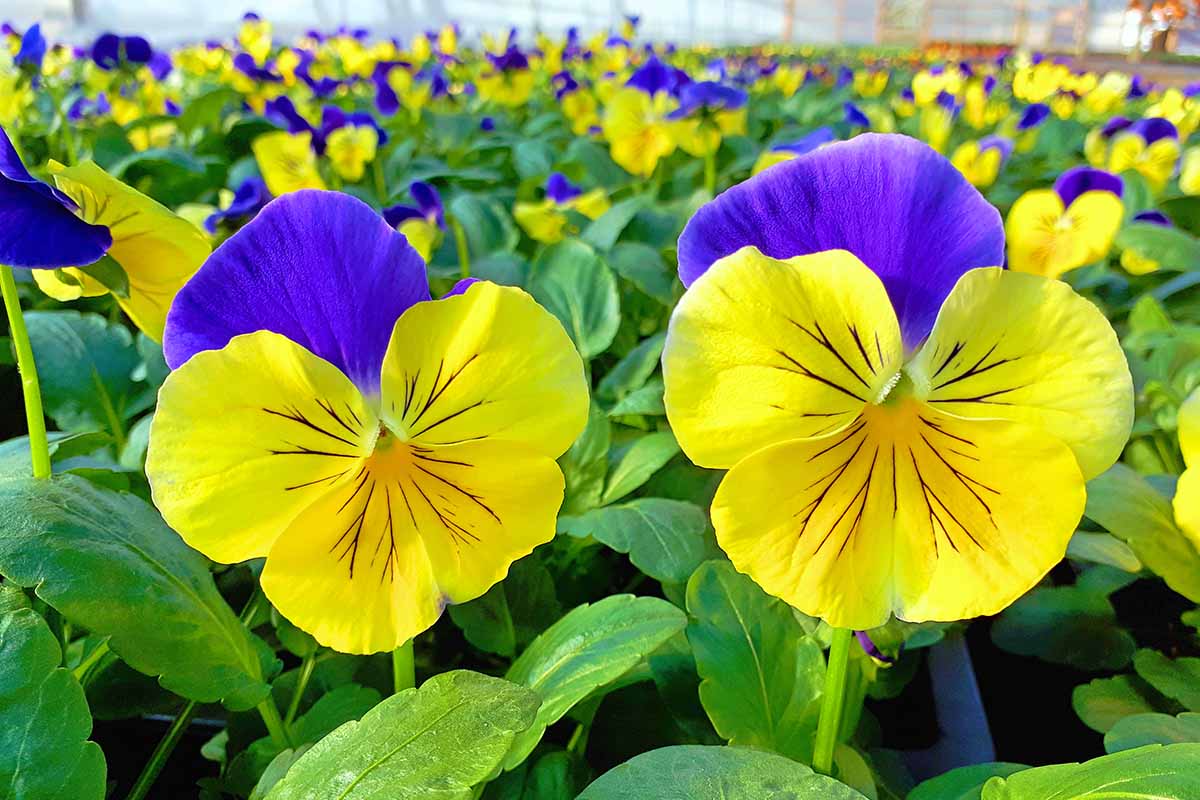
The pansy flower is widely known as the "Smiley flower" or the "Face flower". It is a cultivated flower, a hybrid derived mainly from the wildflower known as Viola tricolour (wild pansy or heartsease). Its scientific name is Viola × wittrockiana. It is found globally in gardens, but its ancestors are native to Europe and Western Asia. The word comes from the French word pensée, meaning "thought", and was developed in the 1800s to have large, colourful faces.
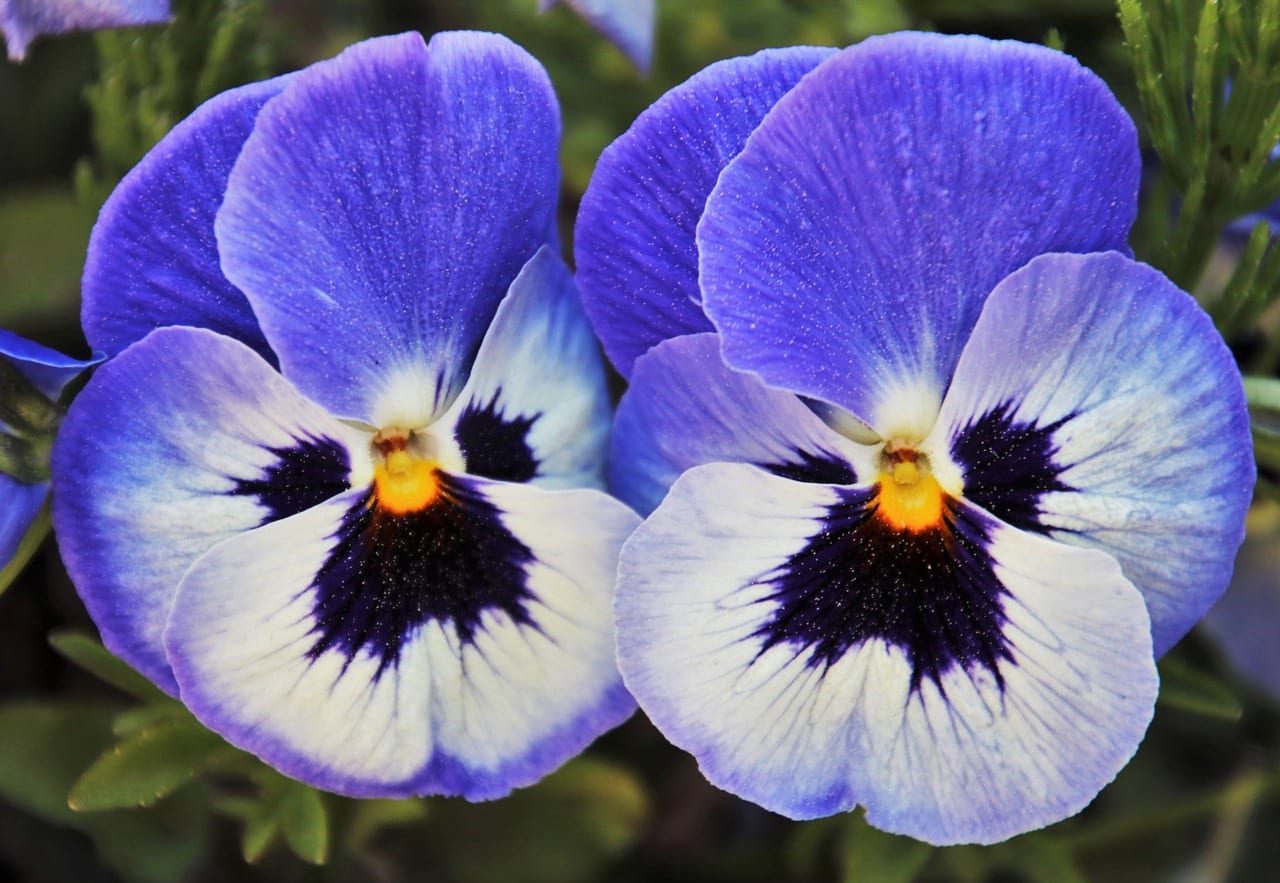
The pansy has five rounded, velvety petals that often overlap. Its most distinct physical characteristic is the dark, central blotch or "eye" on the lower petals, which creates the illusion of a cheerful little face smiling back at you. This unique face-like pattern is why it earned the nickname "Smiley flower". Pansies prefer cool weather and are popular bedding plants for spring and fall gardens. They thrive in well-drained soil and prefer full sun.
10 Lesser-Known Facts About Pansies
- Both the flowers and leaves are edible and are often used as colourful garnishes in salads and desserts.
- Pansies are a good natural source of Vitamins A and C.
- The word 'pansy' comes from the French pensée, meaning "thought" or "remembrance".
- In the 16th and 17th centuries, pansy juice was believed to be an ingredient in love potions and was famously mentioned in Shakespeare's A Midsummer Night's Dream.
- They are incredibly cold-hardy and can survive frost, making them among the first flowers to bloom in early spring and the last to fade in the fall.
- The fragrance of some pansy varieties (predominantly yellow and blue ones) is strongest in the early morning or at dusk.
- They commonly come in three colour patterns: a single solid colour, a pattern with fine black lines (pencilling), or the iconic "face" blotch.
- The pansy was once adopted as a symbol by the Free Thinkers Society because its name means "thought", promoting independent reflection.
- The leaves of the pansy plant are typically small and heart-shaped.
- In some parts of Europe, the pansy is nicknamed the "stepmother flower" because of a folk tale that links the arrangement of its petals to the different family members.
Why are Pansies called Smiley Flowers?
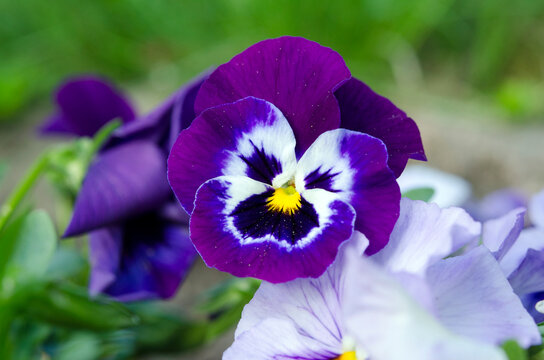
Pansies are called "Smiley Flowers" because of their distinctive visual pattern that perfectly mimics a tiny human face. The reason is purely anthropomorphic (attributing human characteristics to non-human things):
- The "Face" or "Blotch": Many popular pansy varieties, known as blotch-faced pansies, have a large, dark, contrasting colour marking right in the centre of the five petals.
- The Features: This dark centre blotch is framed by the lighter-coloured outer petals. The central mark, especially with its slight variations and lines (sometimes called pencilling or whiskers), naturally looks like eyes and a mouth.
- The Expression: Because the petals are rounded and the "face" is generally symmetrical and slightly upturned, the entire bloom gives the playful, charming illusion of a small, cheerful, smiling expression looking up at you from the garden bed.
This is why they have also earned other common names, like "Face Flower" and, historically, "Heartsease" (which meant "cheerfulness of mind").

Kriti Barua is a skilled digital journalist and communications professional with 4+ years of experience, currently writing for the General Knowledge section at Jagran New Media. She has established herself as a subject matter expert in History, Geography, Trending National and International News, Sports, Science, and Defence, producing clear, reliable, and search-optimised content that connects with readers worldwide.
Kriti holds a BA degree from Delhi University and a one-year diploma in TV Production and Journalism, an academic background that adds research depth and strong storytelling instincts to her writing. Her experience spans brand writing, content marketing, and digital media, giving her a sharp understanding of what makes content both helpful to readers and visible in search.
At Jagran New Media, she applies this expertise to national and international news coverage, query-based articles, and in-depth pieces across her specialist subject areas. Her content is defined by easy language, factual accuracy, strong keyword strategy, and reader-friendly storytelling.







![[Link Active] RRB NTPC UG CBT 2 Answer Key 2026 LIVE: Download CEN 07/2025 Response Sheet PDF](https://img.jagranjosh.com/images/2026/September/2492026/RRB-NTPC-UG-CBT-2-Answer-Key-2026.jpg)