Key Points
- Lake Kariba is the largest Man-made lake in the world, as per the volume.
- The primary functions of Man-made lakes is to provide hydroelectric power, supply water for drinking and irrigation, and offer flood control.
- These marvels come at a cost, often requiring the forced displacement of people and wildlife, highlighting the complex balance between human progress and nature.
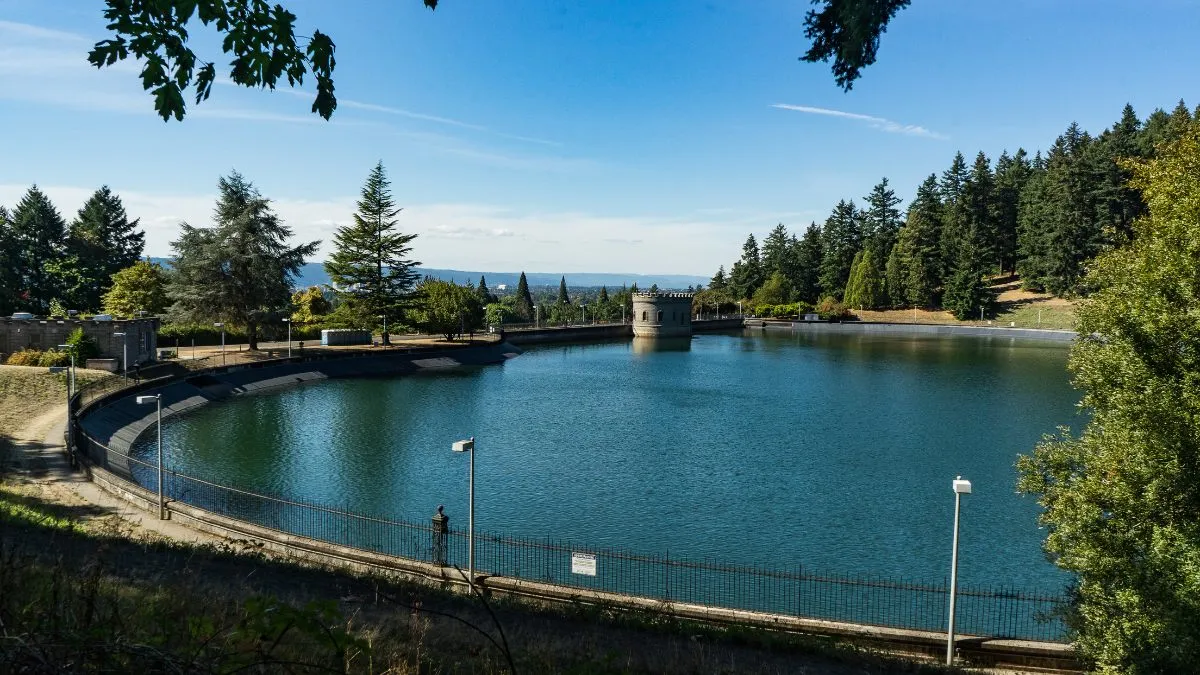
Largest man-made lake: When we think of lakes, most of us imagine natural water bodies formed over thousands of years. However, here is the interesting part: not all lakes are naturally formed. Some of the largest lakes in the world are actually man-made lakes, created when rivers are blocked with massive dams.
These crucial man-made water bodies are also known as reservoirs, which play a huge role in modern human life. They store water for drinking water supply and irrigation (farming), generate electricity (hydroelectric power), support fisheries, and even help with flood control. However, constructing these giant lakes comes with some basic consequences, such as the displacement of people and wildlife. Still, these monumental reservoirs stand as symbols of modern engineering and human effort to control nature for survival and progress
Check out: List of Largest Castles In The World
List of Largest Man-Made Lakes in the World
Let’s take a look at some of the largest man-made lakes in the world:
| Sr. No. | Lake Name | Volume (km³) | River | Country | Year Built |
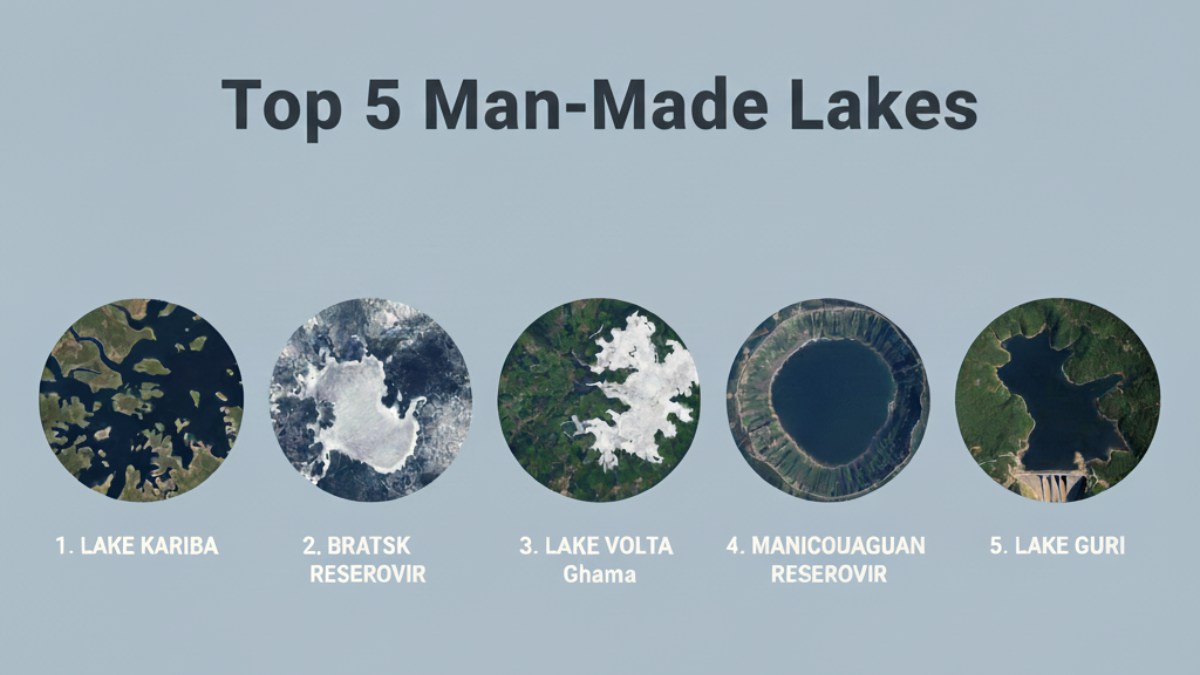
| 1 | Lake Kariba | 180.6 | Zambezi River | Zambia/Zimbabwe | 1959 |
| 2 | Bratsk Reservoir | 169.0 | Angara River | Russia | 1964 |
| 3 | Lake Volta | 150.0 | Volta River | Ghana | 1965 |
| 4 | Manicouagan Reservoir | 141.8 | Manicouagan River | Canada | 1968 |
| 5 | Lake Guri | 135.0 | Caroní River | Venezuela | 1986 |
| 6 | Lake Nasser | 132.0 | Nile River | Egypt | 1971 |
| 7 | Williston Lake | 74.3 | Peace River | Canada | 1967 |
| 8 | Krasnoyarsk Reservoir | 73.3 | Yenisei River | Russia | 1967 |
| 9 | Zeya Reservoir | 68.4 | Zeya River | Russia | 1978 |
| 10 | Robert-Bourassa Reservoir | 61.7 | La Grande River | Canada | 1981 |
-
Lake Kariba
Lake Kariba is the largest artificial lake in the world by volume, a colossal man-made reservoir spanning approximately 170 miles along the Zambezi River. Created by the construction of the Kariba Dam, the lake serves as a critical hydroelectric power source, supplying essential electricity to both Zambia and Zimbabwe. However, this large-scale engineering project had profound consequences: it required the mandatory resettlement of over 57,000 local people, predominantly the Tonga community, and necessitated Operation Noah, a massive wildlife rescue effort that saved thousands of animals from the rapidly rising waters, highlighting the significant human and ecological cost of its creation.
2. Bratsk Reservoir
The Bratsk Reservoir, located in Siberia, is a massive and vital component of Russia's infrastructure, recognized as one of the world's largest artificial lakes by volume, though slightly smaller than Lake Kariba. Its primary function is large-scale hydroelectric power generation via the Bratsk Hydroelectric Power Station, making it a major energy source for the region. The reservoir is also famous for its setting: it is surrounded by some of the coldest inhabited regions on Earth, enduring extreme subarctic temperatures for much of the year, which adds to its unique, rugged Siberian character.
3. Lake Volta
Lake Volta in Ghana holds the title of the world's largest man-made lake by surface area, an immense body of water covering over 3,283 square miles, which impressively constitutes about 3.6% of Ghana’s total landmass. Formed by the impoundment of the Volta River by the Akosombo Dam, this colossal reservoir is a critical regional power source, generating essential hydroelectric power for Ghana and also supplying electricity to neighboring nations like Togo and Benin. Despite its vital role in energy infrastructure, the reservoir's creation involved significant social cost, leading to the forced displacement of numerous local communities and the inundation of vast tracts of fertile farmland.
4. Manicouagan Reservoir
This visually striking Canadian reservoir, often called the 'Eye of Quebec' due to its perfect circular shape, is unique because it was formed within the central ring of the Manicouagan Impact Crater, one of the Earth's largest and oldest known asteroid impact structures. This massive hydroelectric reservoir, officially known as the Manicouagan Reservoir, is not only a geological marvel but also a highly functional component of Quebec's energy infrastructure, utilizing the René-Lévesque Generating Station to produce a substantial 2,596 megawatts of electricity, making it both a scenic wonder when viewed from space and a major source of power generation.
5. Lake Guri
Lake Guri, officially known as the Guri Reservoir, is one of South America's largest reservoirs and stands as a foundational pillar of Venezuela's energy infrastructure. Formed by the Guri Dam on the Caroní River, this vast man-made lake is home to the Simón Bolívar Hydroelectric Power Plant, a massive hydro plant that is absolutely crucial for the country, providing a substantial percentage of Venezuela's electricity and acting as the central nervous system of its entire national power grid.
6. Lake Nasser
Lake Nasser is a colossal man-made reservoir in Egypt and Sudan, created by the construction of the Aswan High Dam, which was completed in 1971 with a capacity of about cubic kilometers. It was built primarily to end the damaging annual Nile floods, guarantee a steady water supply for extensive perennial irrigation to support agriculture, and generate a massive amount of hydroelectric power for Egypt's modernization. However, this massive engineering project came with significant costs, including the forced relocation of the native Nubian population, the interruption of the Nile's natural flow and fertile silt, and a monumental international effort to save ancient monuments like Abu Simbel from being submerged.
7. Williston Lake
Williston Lake is the largest freshwater body in British Columbia, created in 1968 by the massive W.A.C. Bennett Dam, one of the world's highest earth-fill dams, across the Peace River. The reservoir, with a capacity of cubic kilometers, was a cornerstone of a major provincial development project aimed at harnessing the Peace River's power potential, primarily for hydroelectric energy generation for the region and the export market. The vast project successfully provides a substantial portion of British Columbia's electricity; however, its creation involved the flooding of a huge forested area and the consequent displacement of local First Nations communities (particularly the Tsay Keh Dene), making it a project of both immense engineering achievement and significant social and environmental consequence.
8. Krasnoyarsk Reservoir
The Krasnoyarsk Reservoir is an immense, artificial lake located in Russia, formed when the powerful Yenisei River was dammed. Completed in 1967, its primary function is to feed the Krasnoyarsk Hydroelectric Power Station, making it a critical source of electricity for the region. By volume, it holds a staggering 73.3 cubic kilometers of water, establishing it as one of the largest reservoirs in the world.
9. Zeya Reservoir
Check out: List of Smallest Trees in the World
Conclusion
These enormous man-made lakes (reservoirs) are created by damming rivers, with Lake Kariba being the largest by volume. They are crucial for supplying electricity, water, and controlling floods. While they are marvels of human engineering, they also cause the displacement of people and wildlife. They represent humanity's power to change nature for survival and progress.
Enter your Blink text here...






Comments
All Comments (0)
Join the conversation