Which Flower Is Known As The Queen Of The Night?
Queen of the Night: The title "Queen of the Night" belongs to the stunning Epiphyllum oxypetalum, an epiphytic cactus native to the tropical rainforests of Mexico and Central America. This magnificent flower is known for its pure white, highly fragrant blooms, which open for only a single night and typically wilt by dawn.

Did you know that some flowers can grow up to 30 feet tall? The world of flora is genuinely remarkable. There are over 400,000 different species of flowering plants across the globe. Some bloom in bright sunshine, while others wait for the deep darkness of night. For example, the tiny Wolffia globosa is the world's smallest known flowering plant.
In contrast, the Titan Arum is famous for having the largest, yet smelliest, unbranched inflorescence. Flowers hold many secrets, from their size to their surprising scents. But do you know which flower is known as the "Queen of the Night"? It is a title given to a truly magnificent and mysterious bloom. In this article, we'll take a look at the history, beauty, and unique characteristics of this famous nighttime flower and reveal why it earned its royal title.
Which Flower Is Known As The Queen Of The Night?
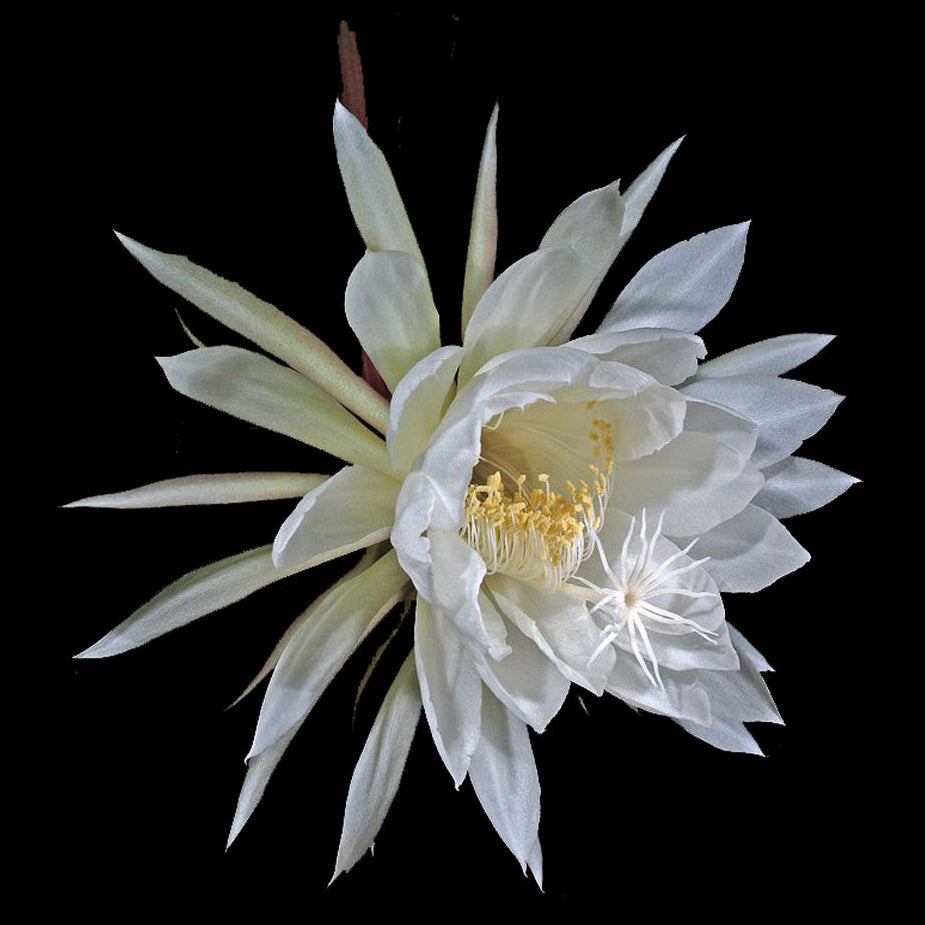
The flower most commonly known as the "Queen of the Night" is Epiphyllum oxypetalum, also nicknamed the Dutchman's Pipe Cactus. This captivating plant is native to the rainforests of Southern Mexico and Central and South America. It is an epiphytic cactus, meaning it grows non-parasitically on other plants, like trees, or on rocks. It looks distinct, with long, flat, leaf-like green stems (called phylloclades) that can sprawl or climb.
Its show-stopping white, funnel-shaped flowers are enormous, very fragrant, and can measure up to 12 inches across. The most famous fact is its blooming schedule: the spectacular flowers open only after sunset and wilt completely before dawn, offering a single, fleeting yet powerful night of beauty.
10 Lesser-Known Facts About the Queen of the Night
- Several other night-blooming cacti, like Peniocereus greggii and Selenicereus grandiflorus, also share the "Queen of the Night" nickname.
- Each flower typically blooms for just one night per season, making a witnessed bloom a special, rare event.
- The flower's strong, sweet scent and brilliant white colour are specifically designed to attract nocturnal pollinators, such as moths and bats.
- What look like long, flat leaves are actually modified stems called phylloclades, which perform photosynthesis.
- After blooming, the plant sometimes produces a purplish-red, oblong fruit that is actually edible.

- In parts of Asia, the flowers are dried and used in traditional medicine, particularly in soups, to treat respiratory ailments.
- Despite its dramatic, fleeting flower, the Epiphyllum oxypetalum is a relatively fast-growing cactus species.
- Unlike desert cacti, it's an epiphytic cactus that thrives in humid, tropical conditions and indirect light, not direct, harsh sun.
- The genus name Epiphyllum means "upon the leaf" (referring to how the flower grows on the stem), and oxypetalum means "with acute petals."
- The magnificent blossoms are known to release a powerful, gardenia-like fragrance, often described as having notes of vanilla or orange blossom.

Kriti Barua is a skilled digital journalist and communications professional with 4+ years of experience, currently writing for the General Knowledge section at Jagran New Media. She has established herself as a subject matter expert in History, Geography, Trending National and International News, Sports, Science, and Defence, producing clear, reliable, and search-optimised content that connects with readers worldwide.
Kriti holds a BA degree from Delhi University and a one-year diploma in TV Production and Journalism, an academic background that adds research depth and strong storytelling instincts to her writing. Her experience spans brand writing, content marketing, and digital media, giving her a sharp understanding of what makes content both helpful to readers and visible in search.
At Jagran New Media, she applies this expertise to national and international news coverage, query-based articles, and in-depth pieces across her specialist subject areas. Her content is defined by easy language, factual accuracy, strong keyword strategy, and reader-friendly storytelling.