Which was the first Nuclear Reactor in India?
India’s first nuclear reactor, APSARA, commissioned in 1956 at Trombay, marked Asia’s entry into nuclear research. This milestone established India’s atomic energy programme, enabling advances in science, medicine, agriculture, and indigenous reactor development.
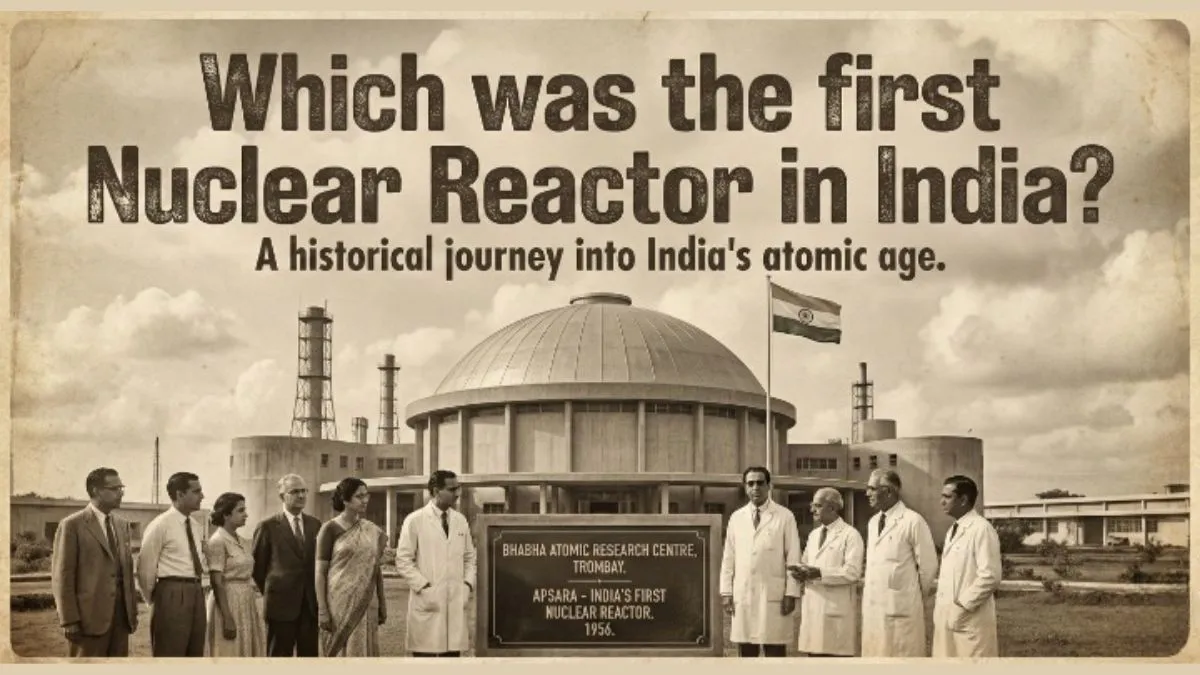
The development of nuclear science marked a turning point in modern India’s scientific and technological progress. Soon after independence, Indian leadership recognised the importance of atomic energy for national development, research, and self-reliance.
India started a base of peaceful nuclear research under the supervision of visionary scientists and a solid political base. The building of the first nuclear reactor in the country was considered one of the first and most important conquests of this endeavour.
It was a historic step not only to place India in the ranks of the scientifically developed countries of the world but to pave the way to further advances in nuclear research, medicine, agriculture, and industry.

Source: brightcareermaker
Which was the first Nuclear Reactor in India?
The first nuclear reactor in India was APSARA.
APSARA was commissioned at Trombay, Mumbai, and achieved its first criticality on 4 August 1956. With this achievement, India became the first country in Asia to operate a nuclear research reactor. APSARA marked India’s formal entry into the nuclear age and became the cornerstone of the nation’s atomic energy programme.
Facts about India’s First Nuclear Reactor (APSARA)
| Feature | Detail |
| Name of Reactor | APSARA |
| Country | India |
| Location | Trombay, Mumbai |
| Organisation | Atomic Energy Establishment, Trombay (Now Bhabha Atomic Research Centre – BARC) |
| Date of First Criticality | 4 August 1956 |
| Dedicated to the Nation | 20 January 1957 |
| First Prime Minister at Dedication | Jawaharlal Nehru |
| Type | Research Reactor |
| Distinction (India) | First nuclear reactor in India |
| Distinction (Asia) | First research reactor in Asia |
What are the objectives for the establishment of the First Nuclear Reactor of India?
Major objectives for the establishment of the First Nuclear Reactor of India is:
-
Nuclear training of scientists and engineers.
-
Basic research on nuclear physics.
-
Neutron beam experiments
-
Neutron activation analysis
-
Radioisotopes production of:
-
Medicine
-
Agriculture
-
Industry

Source: PIB
What are the Design & Technical Features of the First Nuclear Reactor of India?
The Design & Technical Features of the First Nuclear Reactor of India are:
-
Reactor Type: Swimming Pool Type Research Reactor
-
Thermal Power: 1 MW
-
Moderator: Light Water
-
Coolant: Light Water
-
Fuel Used: Enriched Uranium (plate-type fuel elements)
-
Construction:
-
Designed, built, and commissioned by Indian scientists and engineers
-
Completed in record time for its era
What is the Historical Importance of the First Nuclear Reactor of India?
The Historical Importance of the First Nuclear Reactor of India is:
-
APSARA marked India’s entry into the nuclear age
-
It laid the foundation of India’s atomic energy programme
-
Proved India’s capability to build nuclear reactors indigenously
-
Helped in the development of later reactors like CIRUS, Dhruva, and research reactors
What are the Status of the APSARA Reactor in India?
The status of the APSARA Reactor in India is:
-
Operational Period: 1956 – 2009
-
Original APSARA: Shut down in 2009
-
Upgraded Version:APSARA-U, commissioned later with modern safety features
Conclusion
The first nuclear reactor in India is called APSARA and is one of the achievements of the Indian scientific history. It was commissioned in 1956, and it made it possible to initiate the project of the atomic energy of India, enhance the possibilities of nuclear research, and contribute crucially to the nonviolent scientific and technological progress.

Prabhat Mishra is a Subject Matter Expert and digital journalist with an extensive background in the competitive exam landscape and over 4 years of experience in education, national and international news, and current affairs. Over his tenure with top knowledge platforms like Mentorship India, IAS BABA, IAS SARTHI, and now Jagran Josh, he has a deep understanding of government exams like UPSC and State PCS, including UP and Bihar, as he has already qualified for the UPPCS 2022 Mains and Bihar 68th Mains. With his core expertise in history, polity, geography & current affairs, he specialises in creating well-researched, aspirant-centric content and simplifying complex topics for competitive examinations.


-1792894489918_t.webp)
-1792761794673_t.webp)
-1792850902708_t.webp)


.jpg)
![[OUT] UPSSSC PET Admit Card 2026 LIVE: यूपी पीईटी एडमिट कार्ड जारी, upsssc.gov.in पर Direct Link](https://img.jagranjosh.com/images/2026/October/15102026/UPSSSC-PET-Admit-Card-2026.jpg)