MadhuNetrAI Tool: Know About First AI Retinopathy Screening Programme
Diabetic Retinopathy (DR) is India’s first AI-driven community outreach programme to fight diabetic blindness. MadhuNetrAI will be used for doorstep screenings and automated triaging for diabetic patients in a phased manner. The programme integrates with National non-communicable disease registers to ensure early detection and prompt treatment, with the objective of reducing visual impairment in a country.
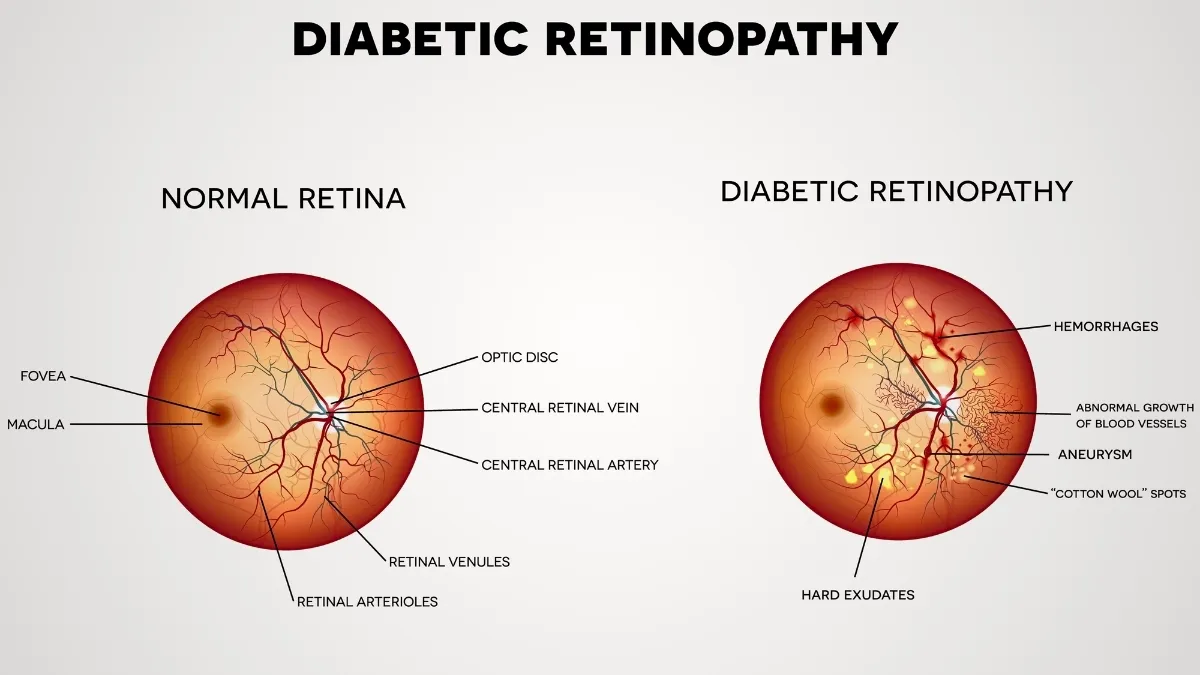
India has launched its first AI-driven diabetic retinopathy programme to address blindness in diabetic patients. It is an emerging preventable cause of blindness in India, with major advancements in early detection of diabetic eye diseases such as diabetes mellitus. The programme aims at reaching out to the people with diabetes at their doorsteps for DR screening.
Key Points of Programme:
- It's the first AI-driven community outreach programme, reaching out to the people with diabetes at their doorsteps for DR screening.
- The programme was launched by the Armed Forces Medical Services in collaboration with the Dr Rajendra Prasad Centre for Ophthalmic Science (RPC), ALLS and the eHealth AI unit of the Ministry of Health.
- The screening will be conducted by trained medical officers, nursing staff and healthcare assistants using MadhuNetrAI, a web-based AI tool developed by the Dr Rajendra Prasad Centre for Ophthalmic Science (RPC).
- It will be implemented in the pilot phase – firstly, it is initiated at seven locations, such as Pune, Mumbai, Bengaluru, Dharamshala, Gaya, Jorhat and Kochi.
What is Diabetic Retinopathy?
Diabetic retinopathy (DR) is the most common microvascular ocular complication of diabetes, and it generally leads to blindness in diabetic patients. Sight-threatening DR, which includes proliferative diabetic retinopathy and diabetic macular edema (DME), is a major cause of visual impairment in people with diabetes. Referable DR is defined as more severe than mild non-proliferative diabetic retinopathy.
Why is there a need for diabetic retinopathy?
According to the national library of medition, Diabetic retinopathy is essential to ensure:
- Timely detection of STDR.
- Appropriate protocols are in place for prompt treatment.
- Education of individuals with diabetes regarding their eye status.
- Referral to physicians for control of the risk factors and other associated complications of diabetes.
Diabetes Eye Diseases in India: Data and Situation
- Diabetes mellitus is now a global epidemic. India is reported to have the second-highest number of people with diabetes in the world, following China.
- The prevalence of diabetes in India varies widely, ranging from 5% to 16% at present.
- Currently, the highest prevalence of diabetes, affecting at least one in every 10 adults, is observed in Chandigarh, Tamil Nadu, Punjab, and Kerala.
- The Southern states are more at risk than the Northern states, and that urban population are more at risk of diabetes compared to their rural.
Also read: Diabetes on the Rise in India: Nation’s First Diabetes Biobank Established
How will the Diabetic Retinopathy programme work?
- The Government of India has introduced non-communicable disease registers (NCD), where people with diabetes are registered and should be screened and monitored regularly for DR.
- The screening will be conducted by trained medical officers, nursing staff and healthcare assistants using MadhuNetrAI, a web-based AI tool developed by the Dr Rajendra Prasad Centre for Ophthalmic Science (RPC).
- It facilitates automated screening, grading and triaging of retinal images captured using handheld fundus cameras.
- Screening will be conducted at the community level, which involves primary health centres, vision centres, diabetes clinics/medical laboratories and a mobile van approach in screening.
What is MadhuNetrAI?
MadhuNetrAI was previously launched by the All India Institute of Medical Sciences (AIIMS) to detect diabetic retinopathy (DR). It is an AI-based mobile application, developed as an easy-to-use screening solution. The app evaluates retinal images and identifies early indicators of diabetic retinopathy within seconds.
What are the signs of diabetic retinopathy?
According to the National Eye Institute, the following symptoms of diabetic retinopathy can be seen
-
The early phases of diabetic retinopathy are frequently symptom-free. Some people have changes in their eyesight, such as difficulty reading or seeing distant objects. These modifications could come and go.
-
In the late stages of the disease, blood vessels in the retina begin to leak into the vitreous (the gel-like fluid that fills the eye). If this happens, you may notice dark, floating dots or streaks that resemble cobwebs. The spots may eventually go away on their own, but it is critical to seek medical attention as soon as possible. Without treatment, scarring can form in the rear of the eye. Blood vessels may begin to bleed again, or the bleeding may worsen.
Who can be screened for Diabetic Retinopathy (RD)?
DR screening should be done for all people with known diabetes on treatment, a single record of random blood sugar (RBS) of ≥200 mg/dl (≥11.1 mmol/l), glycated haemoglobin (HbA1c) >6.5% (48 mmol/l) or higher, or gestational diabetes when first notified to medical personnel.
Also Read:
VB-G RAM G Bill, 2025: Will it replace MGNREGA? Key Highlights of the Bill

Manisha Waldia is a distinguished content strategist with 5 years of experience crafting premium educational content for UPSC and State PCS, with a focus on deep conceptual analysis across Polity, Geography, History, and Environment. She currently brings this expertise to Jagran Josh, where she covers major national and international events, current affairs, and static general knowledge. Over her career, Manisha's specialized insights have led her to curate high-impact materials and serve as a UPSC Mains answer-evaluator for India’s top institutes—including Drishti IAS, Shubhra Ranjan IAS, Study IQ, GS Score, and PWonlyIAS. She has also worked alongside leading NGOs like Oxfam India and Avani Kumaon.
Contact: manisha.waldia@jagrannewmedia.com



.jpg)
![[OUT] UPSSSC PET Admit Card 2026 LIVE: यूपी पीईटी एडमिट कार्ड जारी, upsssc.gov.in पर Direct Link](https://img.jagranjosh.com/images/2026/October/15102026/UPSSSC-PET-Admit-Card-2026.jpg)