What Are Stingless Bees? Nature’s Gentle Pollinators and Their Medicinal Honey
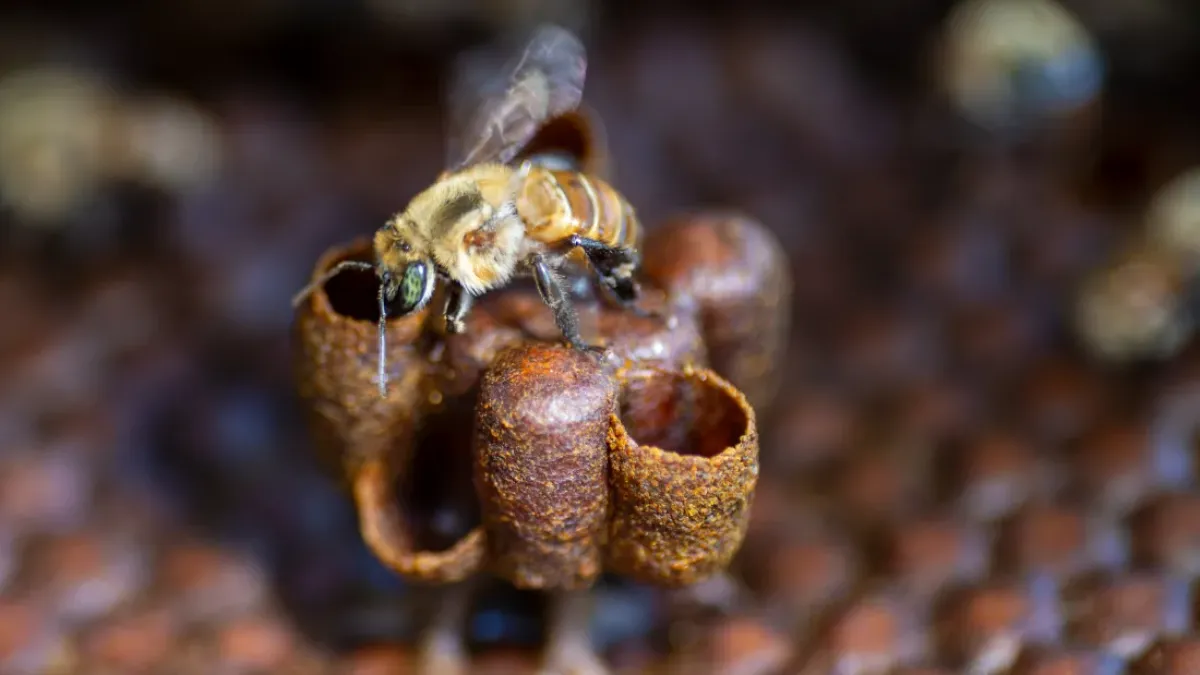
Stingless bees are very social. Even though they do not have stingers they are very important for pollination. They also make honey that is used for medicine. You can find Stingless bees on four continents. These bees are part of the Meliponini tribe. There are over 600 kinds of Stingless bees that we know about. There are probably hundreds more that we have not found yet.
What Are Stingless Bees?
Stingless bees are a type of bee that lives in groups and makes honey. These stingless bees have stingers that're really small so they cannot use them to defend themselves. When stingless bees need to protect their homes they bite to keep predators away. Some species of stingless bees also use a substance to trap predators and stop them from moving.
The stingless bees belong to the tribe Meliponini in the family Apidae. They form colonies that last for a long time with stingless bees queens, stingless bees workers and stingless bees males, similar to honeybees but the stingless bees have distinct nest architecture and behavior.
Many species of the stingless bees nest in tree cavities. They nest in underground hollows or they even nest in wall crevices or the stingless bees nest in termite mounds and they line the interior with wax and plant resins.
Stingless bees live in areas with plenty of trees and flowers. You can find stingless bees in the parts of Australia and Asia and Africa and South America. They like to make their homes in the forest. Stingless bees are very good at living in different weather. They are found in countries, like Australia and Brazil and Malaysia and Mexico. Stingless bees are really interesting to learn about.
They live in tropical and subtropical regions. You can find them in the Americas, Africa, Asia and Australia. Stingless bees are really common in Central and South America. This area is called the Neotropics. There are around 400 species of stingless bees in this area. They live in places like Mexico and Cuba and as far down as Argentina.
In Africa, including Madagascar you can find a lot of species of stingless bees of at least 36 kinds. The place with the types of stingless bees is in the forests and savannas near the equator. Stingless bees are also found in Southeast Asia and northern Australia.
READ | Top 10 Emerging Technologies of 2025: Check the List Here!
These places have a lot of types of stingless bees, which is important because stingless bees help pollinate plants in the rainforests and in areas where people grow crops and trees together known as agroforestry systems, across the warm parts of the world where it is tropical.
How Many Species of Stingless Bees Exist?
There are 605 kinds of stingless bees that we know of and they are divided into 45 groups. We also know that there are some stingless bee species that do not exist anymore and these are found in fossils. Some people think that there may be more stingless bee species there and that the total number of stingless bees could be around 800 or even more including the ones that we have not yet discovered.
There are some genera, like Melipona, Trigona, Tetragonisca, Scaptotrigona, Heterotrigona and Austroplebeia that people know well. These Melipona, Trigona, Tetragonisca, Scaptotrigona, Heterotrigona and Austroplebeia are found in Latin America, Asia and Australia.
Many of these species of Melipona, Trigona, Tetragonisca, Scaptotrigona, Heterotrigona and Austroplebeia are not studied well especially in the forests that are really far away and hot. People are still finding Melipona, Trigona, Tetragonisca, Scaptotrigona, Heterotrigona and Austroplebeia in these places.
What Is Special About Stingless Bee Honey?
Stingless bee honey, which people sometimes call pot honey, is kept in pots made of wax and resin. These pots are different from the cells that Apis mellifera uses. Stingless bee honey has water in it so it is more liquid. It also tastes different from the honey that standard honeybees make. Sometimes stingless bee honey tastes sour or tangy.
Pot honey is really good for you because it has a lot of acids and other helpful things like flavonoids and minerals. Pot honey also has antioxidant properties which means it can help fight off bad things that can make you sick. People have been using pot honey for a time to treat things like eye infections and wounds.
It is also used to help with breathing problems and stomach issues. People in places like Brazil and Mexico and Southeast Asia have been using pot honey for a time to feel better. Pot honey is still used today because it has -inflammatory properties that can help make you feel better when you are sick.
Why Are Stingless Bees Important Pollinators?
Stingless bees are really good at helping plants make seeds in forests and they also help with many crops that people grow to sell. The thing about stingless bees is that they are small and there are a lot of them in one place and they are always flying around looking for food. This makes them very good at visiting lots of kinds of flowers, even the ones that honeybees do not like to visit very much. Stingless bees are very important because they can help plants that other bees, like honeybees do not help well.
Stingless bees do a great job of helping to pollinate passion fruit, coffee, mango, avocado, cocoa and all sorts of native trees and plants that grow underneath them.
They help plants make seeds and keep types of plants alive so stingless bees are very important for tropical ecosystems and making sure people have food to eat. Stingless bees support tropical ecosystems and local food security by doing this important work, for passion fruit, coffee, mango, avocado, cocoa and other plants.
What is Meliponiculture?
Meliponiculture is the practice of keeping stingless bees. People do meliponiculture in places. You can find meliponiculture in Australia and Asia and Africa and South America. Many people around the world do meliponiculture because it helps them get honey and wax from the stingless bees. Meliponiculture is really good, for the environment too.
It is different from apiculture. Apiculture is the practice of managing honey bees. Meliponiculture of stingless bees typically uses smaller hives made of wood or logs.. People who do meliponiculture usually do it in tropical and subtropical climates. This is because stingless bees are usually found in these climates.
The way stingless bees build their homes is also very unique. They use a kind of pot made out of resin and layers of a material called batumen. When it comes to defending themselves stingless bees do not sting like honeybees do. Instead stingless bees will bite to protect themselves.
Recommended Reading:
List of Most Mispronounced Words of 2025 In the United States

Kirti Sharma is a journalist in the education domain with three and a half years of experience creating high-quality content for the education technology (EdTech) and digital media industries. She has an expertise in covering education news. Kirti has experience in writing data backed informational pieces on General knowledge.
Kirti holds a Bachelor of Arts degree, which helped build her strong foundation in writing and research. Over the course of her career, she has brought her skills to a variety of well-known companies, including ThoughtPartners Global, Infinite Group, and MIM-Essay. Through these roles, she has learned how to take complex information and turn it into engaging, easy-to-understand content for readers online.


-1792838780900_t.webp)

-1792643685090_t.webp)




.jpg)
![[OUT] UPSSSC PET Admit Card 2026 LIVE: यूपी पीईटी एडमिट कार्ड जारी, upsssc.gov.in पर Direct Link](https://img.jagranjosh.com/images/2026/October/15102026/UPSSSC-PET-Admit-Card-2026.jpg)