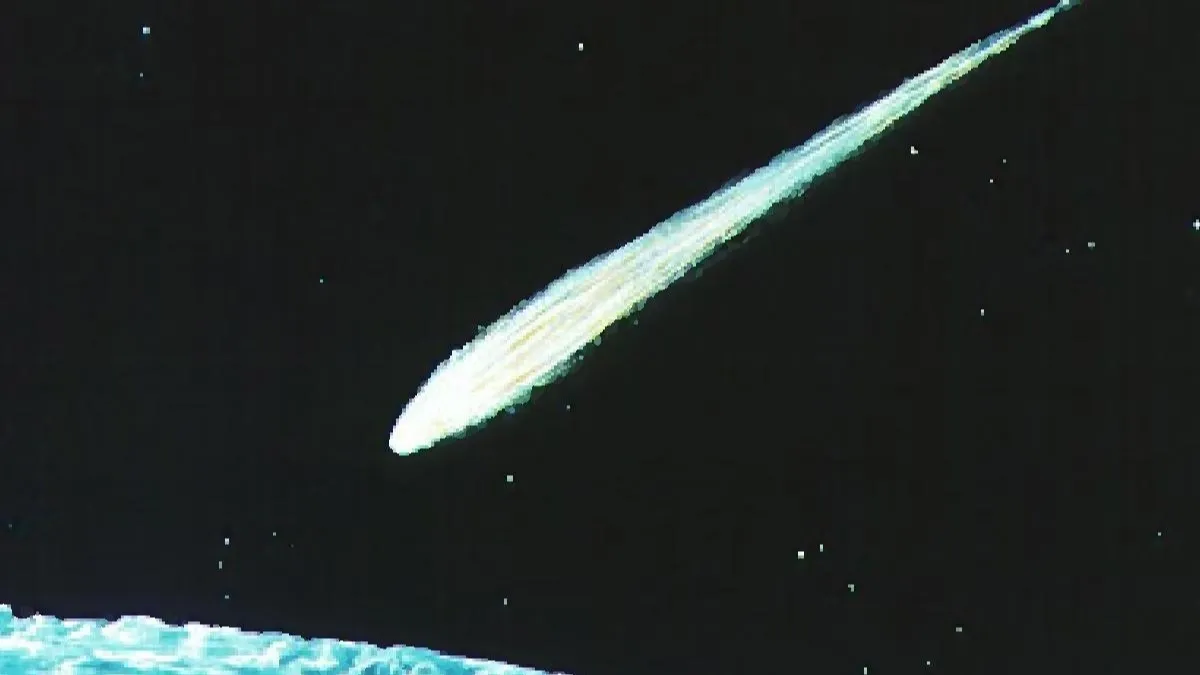
Comet 3I/ATLAS is set to make its closest approach to Earth in December 2025. This comet, discovered in 2025, is known for its bright nucleus and distinctive tail, visible even from urban areas with binoculars or telescopes.
According to NASA, Comet 3I/ATLAS will pass within 1.8 astronomical units (about 270 million km) of Earth, making it one of the closest comet flybys in recent years. Its unique orbit and bright green color have generated significant scientific interest.
Comets like 3I ATLAS offer clues about the early solar system and the origins of water and organic molecules on Earth. Know when Comet 3I/ATLAS makes its closest approach to Earth, how to watch it, why astronomers are excited and what makes this comet special.
When will Comet 3I/ATLAS Make its Closest Approach to Earth?
Comet 3I/ATLAS will reach its closest point to Earth on December 19, 2025. At this time, it will be approximately 1.8 astronomical units away, or about 270 million km.
-
What it is: The oldest comet visitor to enter our solar system from another star.
-
Closest Approach Date: December 19, 2025.
-
Distance: Approximately 1.8 Astronomical Units (about 270 million km or 170 million miles).
-
Safety: Poses no threat to Earth.
-
Visibility: Not visible to the naked eye. Requires a telescope with at least an 8-inch aperture or a large pair of binoculars.
-
Best Time to View: Early morning hours before dawn. It is located in the constellation Leo.
How to Watch Comet 3I ATLAS on December 19?
To watch Comet 3I/ATLAS on December 19, 2025, find a location with minimal light pollution, such as a countryside field or a park.
-
Use binoculars or a small telescope for the best view.
-
Look toward the northeastern sky in the hours before sunrise, focusing on the constellation Leo.
-
The comet will appear as a fuzzy, glowing object with a faint tail.
-
For urban viewers, binoculars are recommended to cut through city lights.
-
Apps like SkySafari or Stellarium can help pinpoint its exact location in the sky.
Watching Comet 3I/ATLAS is a simple and rewarding experience, connecting skywatchers to the wonders of our solar system.
Why Comet 3I/ATLAS's Approach to Earth Helps Astronomers?
The close flyby of Comet 3I/ATLAS is a major event because it is only the third known interstellar comet to visit our solar system. This gives astronomers a rare, direct sample of material from outside our star system. By studying the dust and gases released as the comet heats up, scientists gain crucial insight into the chemical makeup and formation of comets and planets around other stars. This knowledge helps us better understand the origins of our own solar system.
Check Out | List of 9 Comets NASA Is Tracking, #3 Is an Interstellar Visitor
Conclusion
Comet 3I/ATLAS’s close approach to Earth on December 19, 2025, is a rare and exciting event for both skywatchers and scientists. Its visibility and scientific value make it a must-see for anyone interested in astronomy or the wonders of our solar system. Don’t miss this chance to witness a cosmic spectacle and learn more about the universe around us.





-1765866301321.jpg)
Comments
All Comments (0)
Join the conversation