GATE 2026 Admit Card Expected on January 2 at gate2026.iitg.ac.in; Check the Syllabus and Exam Pattern Here
IIT Guwahati will soon release the GATE 2026 Admit Card on the official GOAPS portal at gate2026.iitg.ac.in. Candidates can download the hall ticket and check details there.
Key Points
- IIT Guwahati will soon release the GATE 2026 Admit Card.
- It will be released on the official GOAPS portal at gate2026.iitg.ac.in.
- Candidates can download the hall ticket and check details there.
GATE 2026: The Indian Institute of Technology (IIT), Guwahati will release Graduate Aptitude Test in Engineering (GATE) 2026 Admit card soon. Candidates will need to visit the official GATE Online Application Processing System (GOAPS) portal to download the hall ticket when the board releases it at gate2026.iitg.ac.in. Candidates can check the GATE 2026 admit card details here.
GATE 2026 Key Highlights
Check the following table carrying the important details of GATE 2026 CSE Exam:
| Overview | Details |
| Event name | GATE 2026 Admit Card soon |
| Exam name | Graduate Aptitude Test in Engineering (GATE) |
| Board name | Indian Institute of Technology (IIT), Guwahati |
| Academic year | 2026-27 |
| Official website | gate2026.iitg.ac.in |
| Application portal | GATE Online Application Processing System (GOAPS) |
| Stream | Engineering Architecture |
| Level | Postgraduate (PG) |
| GATE Exam dates | February 7, 8, 14, and 15, 2026 |
| Exam shifts | 9:30 AM - 12:30 PM 2:30 PM - 5:30 PM |
| Admit card release date | January 2026 (expected) |
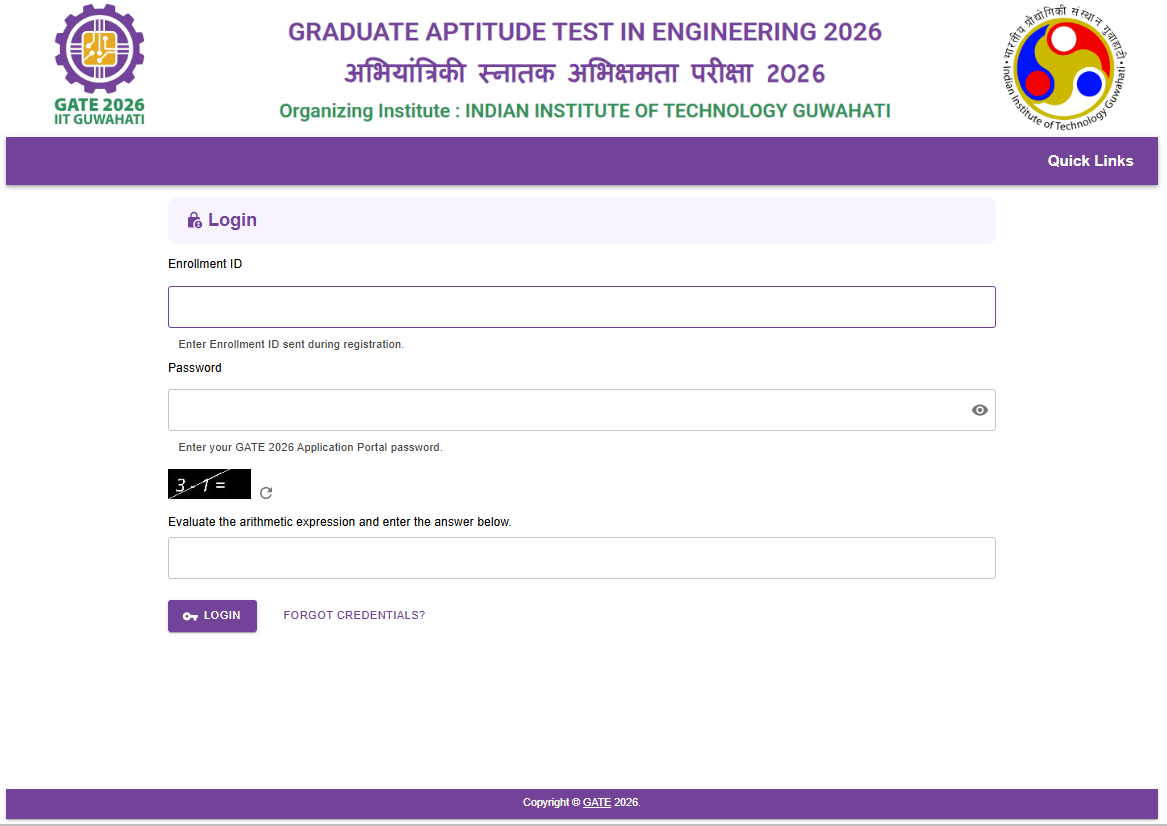
| Login credentials | Enrollment ID Password |
| Exam duration | 180 minutes (3 hours) |
| Mode of exam | Computer-based test (CBT) |
| Total marks | 100 |
How to download GATE 2026 Admit Card online?
Candidates appearing for GATE exam 2026 will need to follow the mentioned steps to download their hall ticket online:
- Visit the official website at gate2026.iitg.ac.in
- Log in using your credentials
- In the candidate dashboard, click on the tab for admit card
- Review your details and download for exam use

Laavanya Negi is Journalist and education news reporter. With foundational experience at top-tier media houses like HT Media and India Today, she brings a sharp, multi-platform lens to her reporting. At Jagran Josh, Laavanya covers the full spectrum of international, national, and regional education news - ranging from CBSE and State Board results to major entrance exams like CUET, JEE, and NEET, and college admissions and counselling. Combining her expertise in news reporting and creative writing, she translates complex updates into timely, actionable, and engaging content for students and educators alike. An avid learner, she possesses multiple certificates in Journalism and German Language. Her dream is to inspire the youth to follow their dreams and enable them by providing timely information.